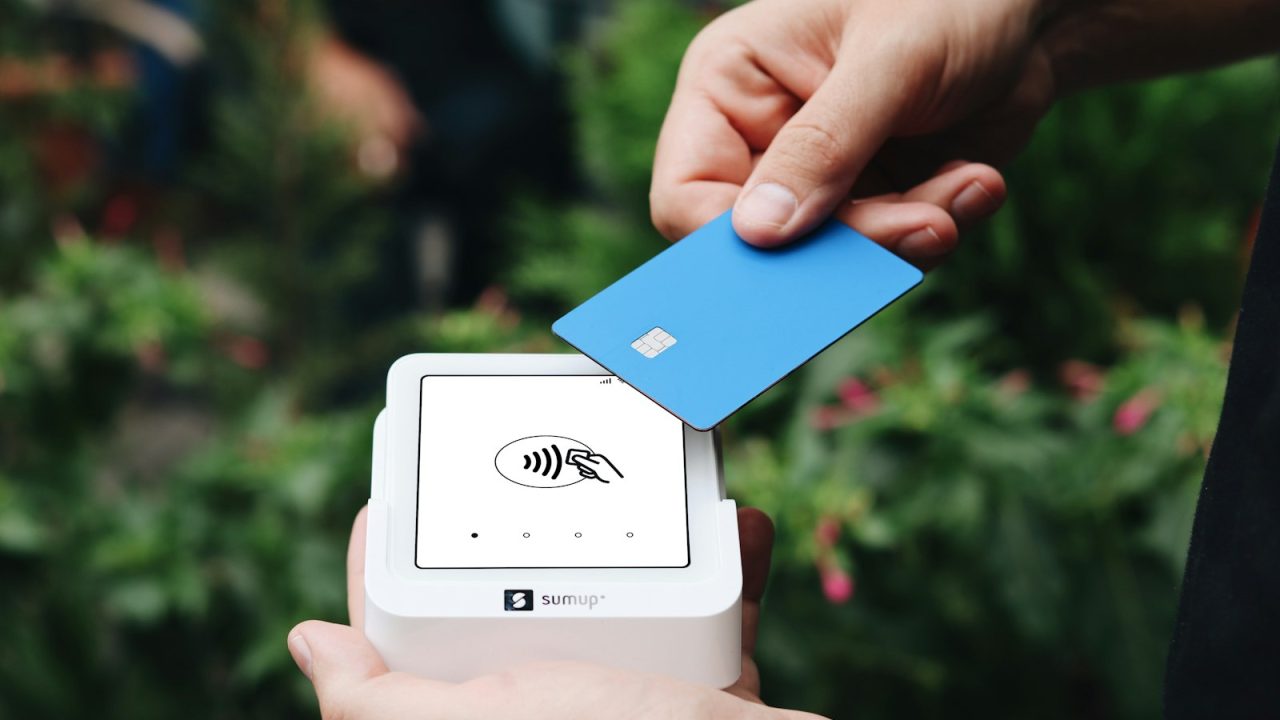

A Square alternative is any payment processor or point-of-sale provider that small businesses use instead of Square to accept credit cards, debit cards, and digital payments. Square uses flat-rate pricing (2.6% plus 10 cents for in-person taps and dips, 2.9% plus 30 cents for online card-not-present), which is simple but expensive once monthly card volume passes roughly $8,000 to $10,000. At that point a dedicated merchant account on interchange-plus pricing, or a dual pricing program that shifts the card fee to the customer, usually wins on real dollars.
ProTech Payments is a merchant services provider in Katy, Texas, serving Houston, Sugar Land, Cypress, Richmond, Pearland, and the rest of Fort Bend County. We move businesses off flat-rate apps onto pricing that reflects actual Visa and Mastercard interchange, and onto Clover hardware that keeps your hardware investment if you ever switch processors. A typical Katy retailer doing $40,000 a month saves $4,800 to $9,600 a year by leaving Square, depending on average ticket and card mix.
This guide compares the main Square alternatives by pricing model, hardware lock-in, contract terms, and the kind of business each fits. It uses concrete numbers so you can run the math against your own statement before deciding.
Why businesses outgrow Square
Square works well for a food truck, a weekend vendor, or a brand-new shop with low and unpredictable volume. The all-in-one signup, the free reader, and the lack of monthly fees remove friction when card volume is small. The problem starts when volume grows.
Flat-rate pricing bundles three costs into one rate: the interchange Visa and Mastercard set, the card network assessments, and Square’s markup. When your monthly volume is steady, that bundle hides how much markup you are paying. A debit card that costs Square about 0.05% plus 22 cents in interchange (capped under the Durbin Amendment for regulated debit) still gets charged to you at 2.6% plus 10 cents.
The second reason businesses leave is funding and support. Square holds funds on flagged accounts with little warning, and support runs mostly through chat and email. A growing business with a dedicated merchant services account gets a named representative, next-day funding, and pricing that drops as volume rises rather than staying flat forever.
How Square pricing actually works
Square charges 2.6% plus 10 cents for swiped, dipped, and tapped cards, 2.9% plus 30 cents for online and invoice payments, and 3.5% plus 15 cents for manually keyed transactions. There is no monthly account fee on the free plan, no PCI compliance fee, and no statement fee. That simplicity is the entire selling point.
The cost shows up in the markup. On a $100 in-person sale, interchange and assessments on a typical rewards Visa run about $1.80. Square charges you $2.70. The 90-cent gap is markup, repeated on every transaction, every day. Across $40,000 a month that gap alone runs several hundred dollars beyond what an interchange-plus account would charge.
Square also keeps you inside its ecosystem. Square readers and registers only run on Square, so leaving means buying new hardware. Compare options with our credit card processing fee calculator before you commit to any provider, Square included.
The main Square alternatives compared
The realistic alternatives split into three groups: other flat-rate apps (Stripe, PayPal, Clover Go), full merchant accounts on interchange-plus, and fee-elimination programs like dual pricing or cash discount. The table below compares the headline numbers.
| Provider / model | In-person rate | Online rate | Monthly fee | Hardware | Best for |
|---|---|---|---|---|---|
| Square | 2.6% + 10c | 2.9% + 30c | $0 | Square only | Very low volume, new businesses |
| Stripe | 2.7% + 5c | 2.9% + 30c | $0 | Terminal hardware | Developers, online-first |
| PayPal / Zettle | 2.29% + 9c | 3.49% + 49c | $0 | Zettle reader | Existing PayPal sellers |
| Clover (flat) | ~2.6% + 10c | ~2.9% + 30c | $0 to $135 | Clover (portable) | Retail, restaurants wanting apps |
| Interchange-plus merchant account | interchange + 0.20% to 0.50% | interchange + markup | $10 to $30 | Clover or terminal | Steady volume over $10k/mo |
| Dual pricing program | near 0% to merchant | near 0% to merchant | low flat | Clover | Any business wanting to cut fees to near zero |
Stripe and PayPal are still flat-rate, so they carry the same structural markup as Square. The real savings come from the bottom two rows. A point-of-sale system on Clover paired with interchange-plus or dual pricing is what most growing Katy and Houston merchants move to.
Pricing models that beat flat-rate
Interchange-plus
Interchange-plus passes through the exact Visa and Mastercard interchange, then adds a fixed, disclosed markup, for example interchange plus 0.30% and 8 cents. You see on every statement what the networks charged versus what your processor charged. On a debit-heavy business this model is dramatically cheaper than flat-rate because regulated debit interchange is capped near 0.05% plus 22 cents and flat-rate ignores that cap. Read our interchange-plus pricing explained breakdown for the line-by-line math.
Dual pricing and cash discount
A dual pricing program shows two prices: a lower cash price and a card price. The card price covers the processing cost, so the merchant keeps close to 100% of the listed price on card sales. A cash discount program works similarly by posting the card price and offering a discount for cash. Both are legal in Texas when disclosed correctly, which our dual pricing legal in Texas guide covers. Estimate your savings with the dual pricing savings calculator.
Membership or wholesale pricing
Some processors charge a fixed monthly membership and pass interchange through at cost with zero percentage markup. This suits high-volume merchants where the membership is cheaper than any per-transaction markup. It rarely beats dual pricing for fee elimination but it is transparent and predictable.
Choosing by business type
Restaurants and bars
A restaurant needs tableside ordering, tip adjustment, and KDS integration, areas where Square’s restaurant tier adds monthly cost fast. A Clover setup on restaurant merchant services handles coursing, modifiers, and tip pooling, and pairs with dual pricing to absorb processing on thin food margins. See our best restaurant POS system comparison.
Retail and convenience
Retailers want inventory, barcode scanning, and gift cards. Retail merchant services on Clover Station Duo covers all three plus gift card and loyalty programs Square charges extra for. Our best retail POS system post ranks the options.
Service businesses
Auto repair, salons, and home services often invoice and take deposits. Auto repair merchant services, salon and spa merchant services, and home services merchant services combine a virtual terminal for phone payments with mobile payments for techs in the field. For e-commerce, an online payments setup with a dedicated payment gateway replaces Square Online without the flat-rate markup.
Hardware and lock-in
The biggest hidden cost of Square is hardware lock-in. Square hardware runs only on Square. If you ever leave, the Square Register and readers become paperweights, and you buy everything again.
Clover is semi-open. Clover devices can be reprogrammed to many processors, so your hardware investment survives a switch. ProTech provides Clover through in-store payments and offers equipment financing so a Station Duo or Flex does not require a large upfront check. If cash flow is tight, working capital advances bridge the gap.
Every alternative still has to meet PCI compliance and run EMV chip, contactless, and tap-to-pay. Skipping PCI DSS validation exposes you to non-compliance fees and liability for a breach, so confirm any provider handles it. Our PCI compliance for small business guide explains the four levels.
Mistakes when switching from Square
The first mistake is comparing only the headline rate. A 2.5% quote with a $99 monthly fee, a PCI fee, a statement fee, and a three-year contract with early termination penalties can cost more than Square. Always read the effective rate, which is total fees divided by total volume.
The second mistake is ignoring batch and funding timing. Square funds next business day by default. Some merchant accounts batch at a set hour and fund in one to two days. Confirm the funding schedule before moving, especially for cash-flow-sensitive operations.
The third mistake is underestimating chargebacks. Square absorbs some friendly fraud quietly, but a dedicated account gives you tools and representment. Pair any switch with chargeback management and review our chargeback prevention playbook. The fourth is skipping the math entirely: get a free statement analysis so the comparison rests on your real numbers, not a generic quote.
Square alternatives for Texas businesses
Texas businesses get an extra advantage that Square does not optimize for: surcharge and dual pricing law. Texas allows compliant credit card surcharging and dual pricing, which means a Katy or Houston merchant can legally move the card fee to the cardholder and keep close to 100% of each sale. Square’s flat-rate model does not implement Texas-compliant dual pricing out of the box.
ProTech Payments works on the ground across the metro: merchant services in Katy, TX, Houston, TX, Sugar Land, TX, Cypress, TX, Richmond, TX, and Pearland, TX. Local underwriting and a named rep beat ticket-queue support when a batch fails on a Friday afternoon.
For businesses that Square declines or freezes, high-risk merchant accounts keep you processing. For B2B and recurring billers, ACH and eCheck processing cuts card fees on large invoices entirely.
Frequently asked questions
Is Square actually more expensive than a merchant account?
For very low volume, no, Square is often cheapest because it has no monthly fee. Above roughly $8,000 to $10,000 a month, the flat-rate markup usually exceeds what an interchange-plus or dual pricing account costs. Run a free statement analysis to find your exact crossover point.
Can I keep my Square hardware if I switch?
No. Square readers, stands, and registers run only on Square’s software and cannot be reprogrammed to another processor. Clover hardware is the common alternative because it can move to many processors, protecting your hardware investment if you switch again later.
What is the cheapest Square alternative for a small retail shop?
A dual pricing program on Clover is usually the cheapest because the card fee shifts to the customer who chooses to pay by card, leaving the merchant keeping close to 100% of each sale. Interchange-plus is the cheapest model that still absorbs the fee yourself. The right choice depends on your average ticket and whether your customers accept a card price.
Are Stripe and PayPal cheaper than Square?
Not structurally. Stripe (2.7% plus 5 cents in person, 2.9% plus 30 cents online) and PayPal Zettle are flat-rate like Square, so they carry the same bundled markup. PayPal can edge out Square on card-present rate but charges more online. Real savings come from interchange-plus or dual pricing, not from another flat-rate app.
How long does it take to switch from Square?
Most merchant account approvals complete in one to three business days. Hardware setup and menu or inventory import add a few days depending on catalog size. ProTech handles the Clover build and data migration so you are running before your next batch cycle.
Will switching hurt my payment acceptance or PCI status?
No, if done correctly. Any reputable processor supports EMV chip, contactless, and Visa and Mastercard acceptance identically to Square, and includes PCI DSS validation. Confirm the provider includes PCI compliance support so you stay validated and avoid non-compliance fees.
Talk to ProTech Payments
The fastest way to know whether a Square alternative saves you money is to compare your real statement against interchange-plus and dual pricing. Start with a free statement analysis and we will show the exact dollar difference on your volume, then get started when the numbers make sense. Questions first? Contact ProTech Payments and a Katy-based rep will walk through your options.