
A cash discount program is a pricing structure that posts a single list price for goods and services, then applies a discount at checkout when a customer pays with cash. Card-paying customers pay the listed price, which already accounts for the merchant’s processing costs, so the business absorbs little or none of the 2% to 4% it would otherwise pay Visa, Mastercard, and the acquirer on each card transaction. For a Katy or Houston merchant running on thin margins, that shift can recover thousands of dollars a year that currently disappear into interchange and processor markup.
ProTech Payments builds and supports cash discount programs for businesses across Katy, Houston, Sugar Land, Cypress, Richmond, and Fort Bend County, configuring the rules directly into the point of sale so the math is correct on every ticket. A restaurant doing $40,000 a month in card volume at an effective rate of 3.2% pays roughly $1,280 monthly in fees. A compliant cash discount setup can move most of that off the income statement while keeping signage and receipts within Texas and card-network rules. The savings are real, but the implementation details decide whether the program holds up to a card brand audit or a customer dispute.
This guide explains what a cash discount program is, how it differs from surcharging and dual pricing, what Texas law and card-network rules require, the costs and ROI, and the mistakes that get merchants fined or shut down. ProTech offers a free statement analysis so you can see your current effective rate before deciding whether cash discounting fits your business.
What a cash discount program is
A cash discount program rewards customers who pay with cash by reducing their price below the posted amount. The legal mechanism matters: the merchant advertises one price (the higher, card-inclusive price) and then takes money off for cash. This is the inverse of adding a fee, and that distinction is what keeps cash discounting clean under federal and Texas rules.
The core idea
The posted price is the price every customer sees on a menu, shelf tag, or website. That price is set high enough to cover the cost of accepting cards. When a customer hands over cash, the register subtracts a discount, commonly 3% to 4%, so cash buyers pay less. Card buyers pay the listed price and the merchant’s card-acceptance cost is built in rather than added on.
Why merchants adopt it
The driver is processing cost. Credit card fees are one of the few line items a small business cannot easily negotiate down to zero, since interchange set by Visa and Mastercard is non-negotiable and flows through First Data/Fiserv and every other acquirer. A cash discount program reassigns that cost to the transactions that create it. ProTech’s cash discount program and related dual pricing options give merchants a way to stop treating processing as a fixed cost of doing business.
How cash discount programs work
The program lives in the point of sale and on your signage. When configured correctly, the technology and the disclosure work together so that no customer is surprised and no card brand rule is broken.
The transaction flow
At checkout, the terminal shows the posted price. If the customer pays cash, the operator or the software applies the discount and the customer pays less. If the customer pays by card, the posted price is charged with no add-on. The receipt itemizes the discount given to cash payers rather than a fee charged to card payers. A modern terminal or point of sale system can automate this so staff do not have to calculate anything by hand.
Signage and disclosure
Card-network rules require clear notice that a cash discount is offered. Signs at the entrance and at the register, plus a line on the receipt, satisfy the disclosure obligation. The wording frames the program as a discount for cash, never as a penalty for cards. ProTech sets the disclosure language and the receipt format during onboarding so the program reads consistently from the door to the printed receipt.
Hardware and software
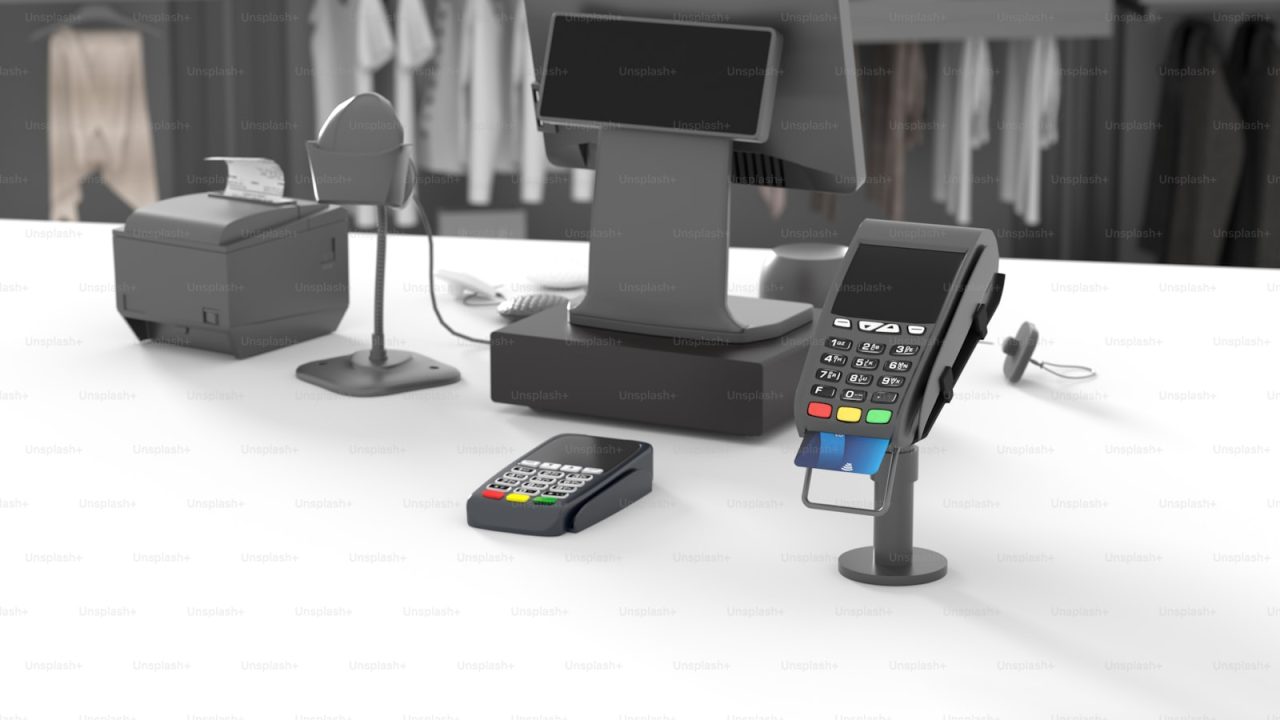
Cash discounting runs on standard EMV-capable terminals and on full POS platforms like Clover. EMV chip acceptance and contactless are unaffected; the discount logic sits on top of normal card processing. Businesses that take cards in person, online, or both can run the model across in-store payments and, with the right configuration, online payments as well.
Cash discount vs surcharging vs dual pricing
Merchants conflate these three models constantly, and the confusion is expensive because each carries different rules. The table below lays out the practical differences.
| Feature | Cash discount | Surcharge | Dual pricing |
|---|---|---|---|
| What the customer sees | One posted (card) price, discount for cash | One base price, fee added for credit | Two prices shown side by side |
| What is added or removed | Discount removed for cash | Fee added for credit cards | Neither; both prices posted |
| Applies to debit cards | No add-on either way | Cannot surcharge debit (Durbin) | Both prices shown, debit billed lower or at card price |
| Card-network registration | Generally not required | Must notify Visa/Mastercard in advance | Varies by configuration |
| Cap on amount | No card-brand cap (it is a discount) | Capped (commonly 3% or interchange, whichever is lower) | Set by posted prices |
| Texas legality | Permitted | Permitted under current rules with disclosure | Permitted with clear posting |
Why the model you pick matters
Surcharging is regulated more tightly: Visa and Mastercard require advance notification, cap the surcharge, and the Durbin Amendment bars surcharging on debit transactions. Cash discounting avoids most of that because reducing a price is treated differently from adding a fee. Dual pricing posts both numbers and lets the customer choose. ProTech’s merchant services team matches the model to your customer base, ticket size, and POS, and our zero-fee credit card processing explainer walks through how each one nets out.
Texas law and card-network rules
Texas is a permissive state for these programs, but permissive is not the same as unregulated. The rules that govern a Texas cash discount program come from three places: federal law, card-network operating regulations, and Texas statute.
Federal and card-network layer
The Durbin Amendment (part of Dodd-Frank) prohibits surcharging debit cards and caps regulated debit interchange. Visa and Mastercard operating rules require disclosure for any differential pricing and govern how surcharges are registered and capped. Because a cash discount is structured as a price reduction, it sidesteps the surcharge registration and cap requirements, but it still must be disclosed clearly. PCI DSS compliance applies regardless of pricing model, since you are still handling cardholder data.
Texas statute
Texas previously had a statute restricting credit card surcharges that courts found unenforceable as applied to truthful price communication. The practical result for Texas merchants today is that cash discounting and surcharging with proper disclosure are both workable, but the disclosure and structure have to be right. Our Texas dual pricing legal guide and the Texas credit card surcharge laws guide cover the current state of the rules in detail.
Staying compliant
Compliance comes down to three things: post the higher price as the real price, frame the cash benefit as a discount, and disclose at the point of sale and on the receipt. Pair that with current PCI compliance and you have a program that survives scrutiny.
Costs, savings, and ROI
The appeal of cash discounting is straightforward: it can take your effective processing cost close to zero on card volume while you continue accepting every card type. The numbers depend on your card mix and average ticket.
A worked example
Consider a Katy retail shop processing $50,000 a month, 80% by card and 20% by cash, at a 3.0% effective rate.
| Item | Without cash discount | With cash discount |
|---|---|---|
| Monthly card volume | $40,000 | $40,000 |
| Monthly card fees (3.0%) | $1,200 | absorbed into posted price |
| Net monthly processing cost | $1,200 | near $0 |
| Annual processing cost | $14,400 | near $0 |
The card-paying customer covers the cost through the posted price, and the cash-paying customer gets a real discount. Run your own figures through the dual pricing savings calculator or the credit card processing fee calculator before committing.
What you still pay
Cash discounting reduces processing cost, it does not eliminate every fee. You may still pay monthly software or terminal fees, PCI fees, and any gateway charges on online volume. ProTech itemizes these during a free statement analysis so the projected savings are net, not gross.
Setup by business type
Cash discounting works differently depending on how customers pay and what the average ticket looks like. ProTech configures the program around the vertical.
Restaurants and quick service
High transaction counts and tip handling make restaurants a strong fit, since the per-ticket savings add up fast. Our restaurant merchant services setup applies the discount cleanly before tip is added so the math is correct on both the food total and the gratuity.
Retail and auto repair
Retail shops with shelf pricing and auto repair shops with written estimates both rely on posted prices, which is exactly what cash discounting needs. See retail merchant services and auto repair merchant services for industry-specific configuration, and the best retail POS system guide for hardware that handles discount logic natively.
Service and professional businesses
Salons, home services, and professional offices that invoice or take payment on completion can apply cash discounts on larger tickets where the savings are most visible. ProTech supports these across salon and spa, home services, and professional services accounts.
Common mistakes and how to avoid them
Most cash discount problems trace back to how the program is framed and disclosed, not to the concept itself.
Framing it as a card fee
The single most common error is letting staff or signage describe the program as a “credit card fee” or “card surcharge.” That reframes a discount as a surcharge and pulls the program under the stricter surcharge rules, including the debit prohibition. Train staff to say “cash discount” and keep signage consistent.
Skipping disclosure
A program without clear entrance and register signage, and without the discount itemized on the receipt, invites disputes and card-brand complaints. Disclosure is cheap insurance.
Applying it to debit incorrectly
Because the model is a discount rather than a surcharge, debit is generally fine, but sloppy configuration that morphs into a debit surcharge violates Durbin. The POS must apply a discount, not a fee. ProTech’s setup avoids this by building the discount into the price logic rather than adding a percentage at the end. Pair the program with chargeback management so any disputes that do arise are handled fast.
The Katy and Houston local angle
ProTech Payments is based in Katy, Texas, at 25140 Kingsland Blvd STE 180, and works hands-on with merchants across the Houston metro. Local matters here because the people setting up your terminal, training your staff on the cash discount script, and answering the phone when a customer questions a receipt are reachable in your time zone and often in person.
On-the-ground support across Fort Bend and Harris County
ProTech serves merchants through dedicated pages for Katy, Houston, Sugar Land, Cypress, Richmond, and Pearland. A local rep can review your signage in person and confirm the disclosure is correct before you go live.
Tools built for Texas merchants
ProTech maintains a Texas surcharge calculator and a full set of merchant tools so Katy and Houston business owners can model savings against their actual statements rather than national averages. For owners weighing processors, our guide to choosing a payment processor for small business frames the decision around cost, support, and contract terms.
Frequently asked questions
Is a cash discount program legal in Texas?
Yes. Cash discounting is permitted in Texas when the program posts the card-inclusive price as the standard price and frames the cash benefit as a discount with clear disclosure at the point of sale and on the receipt. It avoids most of the surcharge-specific restrictions because reducing a price is treated differently from adding a fee.
How is a cash discount different from a surcharge?
A cash discount removes money from the posted price for cash payers, while a surcharge adds a fee on top of the base price for credit card payers. Surcharges must be registered with Visa and Mastercard, are capped (commonly 3%), and cannot be applied to debit cards under the Durbin Amendment. A cash discount has no card-brand cap and is generally not subject to surcharge registration.
Can I apply a cash discount to debit card transactions?
The discount applies to cash payers, so debit and credit customers simply pay the posted price with no add-on. This is what keeps the program compliant with Durbin, which bars surcharging debit. The key is that the POS applies a discount to cash rather than a fee to cards.
How much can a Texas merchant save with a cash discount program?
Savings depend on your card volume and effective rate. A business paying a 3% effective rate on $40,000 of monthly card volume spends about $1,200 a month, or $14,400 a year, that a cash discount program can largely offset. ProTech’s free statement analysis gives you a net figure after any remaining software, PCI, or gateway fees.
What equipment do I need to run a cash discount program?
Standard EMV-capable terminals and POS platforms like Clover support cash discounting; the discount logic sits on top of normal card processing and does not affect chip or contactless acceptance. ProTech configures the discount, signage language, and receipt format during onboarding so staff do not calculate anything manually.
Will customers be upset by a cash discount program?
Framing is what determines the reaction. Customers respond well to a discount for paying cash and poorly to what feels like a fee for using a card, which is why the disclosure and staff script matter. A clearly posted cash discount, consistent from signage to receipt, rarely generates complaints.
Talk to ProTech Payments
A cash discount program only saves money if it is built correctly, disclosed properly, and matched to how your customers actually pay. ProTech Payments configures the entire setup, terminal logic, signage, receipt wording, and staff training, for merchants across Katy, Houston, and Fort Bend County.
Start with a free statement analysis to see your current effective rate and exactly what a cash discount program would save you. When you are ready to move, get started with ProTech and we will have your program live and compliant.