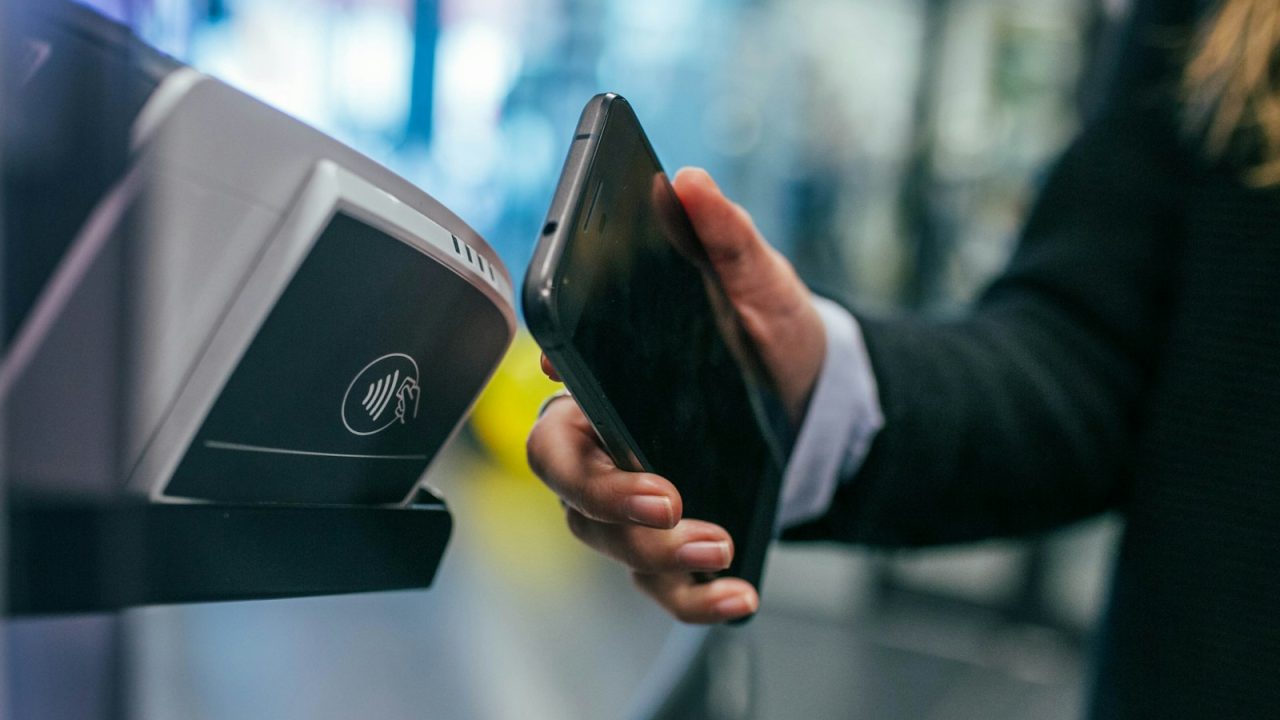

Contactless payments are card and mobile transactions completed by tapping a card or phone near a reader instead of swiping or inserting a chip. The technology rides on the same EMV standards that govern chip cards, but it uses Near Field Communication (NFC) radio at roughly 4 centimeters to move encrypted card data from the customer device to your terminal in under a second. For a merchant, the practical result is faster checkout lines, lower fraud liability, and a payment method that customers in Houston and across Texas already expect at the counter.
ProTech Payments sets up contactless acceptance for businesses in Katy, Houston, Sugar Land, Cypress, Richmond, and Pearland, from a single Clover device at a salon front desk to a multi-lane retail floor. Tap-to-pay is not a separate product you buy on top of card processing: it is a capability of EMV-certified hardware running on networks like Fiserv (formerly First Data). The cost question is rarely the hardware, it is the processing rate and the pricing model attached to every tap, which is where most merchants overpay without realizing it.
This guide explains the mechanics of a contactless transaction, what it costs, how it changes fraud liability, and how to roll it out across restaurant, retail, auto repair, and service verticals. The numbers below reflect 2026 interchange and the rules that apply to Texas merchants.
What contactless payments are
Contactless payments cover two device families that behave identically at the terminal. The first is the contactless-enabled physical card, marked with the four-curved-line wave symbol, issued by Visa, Mastercard, American Express, and Discover. The second is the digital wallet: Apple Pay, Google Pay, and Samsung Pay, which store a tokenized version of the card on the phone or watch.
Cards and wallets use the same rail
Both card and wallet taps travel over NFC and are processed as EMV contactless transactions, so your terminal does not need separate certification for Apple Pay versus a tap-enabled Visa. Once your hardware is EMV contactless certified, every tap method works. This is why a Clover Flex or a Verifone reader accepts a wave card and a phone with no configuration difference on your end.
Tokenization is the difference between card and wallet
A physical contactless card transmits a dynamic cryptogram but still references your real card number through the network. A wallet replaces the Primary Account Number with a device-specific token, so the merchant and terminal never see the actual 16-digit card number. That token distinction matters for fraud exposure and is the reason wallet transactions are among the lowest-risk card-present payments a business can accept.
How a contactless transaction works
A tap completes in four steps that take well under a second, which is faster than chip insertion (typically 2 to 3 seconds) and far faster than signature swipe.
The four-step flow
- The customer holds the card or phone within about 4 cm of the reader. The terminal’s NFC field powers the card chip or wakes the phone’s secure element.
- The chip or secure element generates a one-time cryptogram, a code that is valid only for that single transaction and cannot be replayed.
- The terminal sends the cryptogram and transaction data through your processor (Fiserv, for example) to the card network, which routes it to the issuing bank for authorization.
- The issuer approves or declines and the response returns to the terminal, usually within a second. Customer keeps the card; nothing is handed over.
Cryptograms make replay attacks useless
The cryptogram is what makes contactless secure. Because each tap produces a unique code tied to a transaction counter, a stolen tap cannot be reused. This is the same defense that EMV chip insertion provides, and it is why the liability rules for tap and chip are the same. If you want the full chip background, see our explainer on what EMV is and the companion piece on how credit card payments work.
Limits and CVM
Most issuers set a contactless floor limit above which the customer must verify with a PIN or device biometric. Wallet taps satisfy Cardholder Verification Method (CVM) through Face ID, fingerprint, or passcode at the phone, so they often clear high-ticket purchases without a terminal PIN. Physical tap cards may prompt for a chip insert above the limit.
What contactless payments cost a merchant
Contactless costs the same as any card-present transaction because pricing is driven by interchange and your processor’s markup, not by the tap itself. A tap and a chip insert on the same Visa credit card carry the identical interchange rate.
Interchange is the floor
Interchange is the non-negotiable fee the card networks set and pass to the issuing bank. A typical Visa card-present consumer credit transaction runs around 1.80% plus $0.10, while a regulated debit card under the Durbin Amendment is capped near 0.05% plus $0.21. No processor can go below interchange. Our breakdown of interchange fees covers the full table.
The markup is where you save
What you actually control is the pricing model layered on top of interchange. The table below shows how the same $100 tap sale prices out across the three common models.
| Pricing model | What you pay on a $100 tap | Transparency | Best for |
|---|---|---|---|
| Flat rate (Square, Stripe) | 2.6% + $0.10 = $2.70 | Low (interchange hidden) | Very low volume |
| Tiered | 2.4% to 3.5% depending on “tier” | Lowest (qualified vs non-qualified games) | Almost no one |
| Interchange-plus | ~1.80% + $0.10 + 0.30% margin = $2.20 | Highest (interchange shown) | Most growing merchants |
| Dual pricing / cash discount | Card surcharge offsets fee to ~$0 | Highest | Texas merchants seeking $0 cost |
For a deeper comparison, read our guide to interchange-plus pricing. Many Texas businesses move past the markup question entirely with a dual pricing program that passes the card cost to the customer who chooses to pay by card, leaving the merchant at or near zero processing cost on tap transactions.
Hardware cost
Contactless-capable terminals are inexpensive relative to the processing decision. A Clover Flex or Clover Mini supports tap, chip, and swipe out of the box, and our point-of-sale and in-store payments setups include NFC by default. If cash flow is tight, equipment financing spreads the device cost over the term.
Contactless by business vertical
Tap-to-pay pays off differently depending on ticket size, line speed, and where the transaction happens.
Restaurants and quick service
Speed at the register is the whole game in food service. Tap cuts seconds off every transaction, and pay-at-table devices let servers run a tap without leaving the table. Our restaurant merchant services setups pair Clover handhelds with tip prompts. See also the restaurant credit card processing guide.
Retail and salons
High-volume counters benefit most from queue speed. A retail merchant services lane with NFC clears customers faster during peak hours, and salon and spa businesses use tap plus stored cards for fast rebooking checkout.
Auto repair, home services, and mobile
Service businesses collect payment in the bay, the driveway, or the customer home. A mobile payments reader paired to a phone accepts a tap on site, which matters for auto repair and home services crews who close the ticket where the work happens. Our mobile credit card processing guide covers the field setup.
Contactless vs chip vs swipe
All three are card-present methods, but they differ in speed, security, and liability.
| Method | Speed | Security | Fraud liability shift | Customer action |
|---|---|---|---|---|
| Swipe (magstripe) | ~2 sec | Static data, cloneable | Merchant liable if EMV available | Hand card, sign |
| Chip insert (EMV) | 2 to 3 sec | Dynamic cryptogram | Issuer liable when EMV used | Insert, wait, remove |
| Contactless tap | under 1 sec | Dynamic cryptogram + token (wallet) | Issuer liable, same as chip | Tap, done |
Swipe is the outlier. Magstripe data is static and copyable, and since the 2015 EMV liability shift the merchant carries the fraud loss on a swiped transaction that could have been done by chip or tap. Tap and chip both produce one-time cryptograms, so both move counterfeit-fraud liability back to the card issuer. The practical takeaway: prioritize tap, fall back to chip, avoid swipe unless the card has no chip.
Security, fraud liability, and PCI scope
Contactless reduces two risk categories at once: counterfeit fraud and PCI exposure.
Liability shift in plain terms
Under the EMV liability shift, whoever uses the less-secure technology eats the counterfeit-fraud chargeback. If a counterfeit card is tapped or inserted and clears, the issuer owns the loss. If you swipe a card that had a chip, you own it. Tap therefore sits on the protected side of that line. Chargebacks still happen for other reasons (disputes, non-delivery), which is why chargeback management and our chargeback prevention playbook still matter.
PCI DSS and tap
Contactless and wallet payments narrow your PCI DSS scope because the terminal handles encrypted data and wallets pass only a token. You never store the card number. You still need to maintain PCI compliance on your network and devices, which our PCI compliance service handles, and the PCI compliance for small business guide explains the SAQ requirements.
Tokenization limits breach value
Because a wallet tap exposes only a device token, a breach of stored token data is far less valuable to an attacker than stolen PANs. This is the security argument for actively encouraging Apple Pay and Google Pay at checkout.
Mistakes merchants make with tap-to-pay
The technology is reliable; the errors are operational and contractual.
Accepting tiered pricing on tap volume
A merchant on a tiered plan often sees rewards and corporate cards drop into a “non-qualified” tier at 3.5% or more, even on a tap. Because interchange is identical for tap and chip, there is no pricing reason to accept tiered. A free statement analysis usually exposes this within minutes.
Leaving the contactless reader disabled
Some installs ship with NFC turned off or the antenna unconfigured. Staff then default to chip or swipe and the speed benefit never lands. Confirm the wave symbol lights on the reader and test a wallet tap during setup.
Not training staff to prompt for tap
Customers tap when prompted. A small “Tap to Pay” sign and a one-line staff prompt move a large share of volume to the lowest-risk method. For high-risk verticals, pair this with the right account structure through high-risk merchant accounts.
Ignoring the cost-recovery option
In Texas, surcharging and dual pricing are legal when implemented correctly. Merchants who keep absorbing 2.5% to 3% on every tap leave real money on the table. Review dual pricing legal rules in Texas and the cash discount program before deciding.
Contactless for Katy and Houston businesses
Adoption among Texas consumers is high, and the local mix of restaurants, auto shops, retail, and service businesses maps cleanly onto tap-to-pay benefits.
Local setup and support
ProTech Payments installs and supports contactless terminals for merchant services in Katy and merchant services in Houston, with on-the-ground help across Sugar Land, Cypress, Richmond, and Pearland. The core merchant services account covers every tap, chip, and swipe on one statement.
Estimate your numbers first
Before switching anything, run your own figures with our credit card processing fee calculator and the Texas surcharge calculator to see what dual pricing would save on your tap volume. The full tools library holds both calculators.
Frequently asked questions
Are contactless payments more expensive than chip for merchants?
No. A tap and a chip insert on the same card carry identical interchange, so the cost is the same. What changes your rate is the pricing model your processor uses, not the tap method itself.
Is tap-to-pay safe for my business?
Yes. Each tap generates a one-time cryptogram that cannot be replayed, and wallet payments transmit only a device token, never your customer’s real card number. Tap sits on the protected side of the EMV liability shift, the same as chip.
Do I need a special terminal for Apple Pay and Google Pay?
No separate certification is needed. Any EMV contactless certified terminal, such as a Clover Flex or Clover Mini, accepts tap cards, Apple Pay, Google Pay, and Samsung Pay with no configuration difference.
What is the contactless transaction limit?
Issuers set a floor limit above which verification is required. Physical tap cards may prompt for a chip insert or PIN above that limit, while wallets clear higher amounts because Face ID or fingerprint already satisfies cardholder verification at the phone.
Can I pass contactless processing fees to my customers in Texas?
Yes, when done correctly. Texas permits surcharging and dual pricing within network rules, so a dual pricing program can offset the card cost on tap transactions to near zero for the merchant. ProTech Payments configures the program to stay compliant.
Does contactless reduce my PCI compliance burden?
It narrows your scope because the terminal handles encrypted data and wallets pass only tokens, so you never store card numbers. You still maintain PCI DSS on your network, which our team manages as part of setup.
Talk to ProTech Payments
Contactless is a setting on the right account, not a product to overpay for. The decision that moves money is your pricing model, and the only way to know what you are paying per tap is to read your statement line by line.
Start with a no-cost free statement analysis: send a recent statement and ProTech Payments will show your effective rate on tap volume and what dual pricing would recover. When you are ready to switch terminals or open an account, get started here or contact our Katy team and we will have contactless live on your counter, in your bay, or in the field.