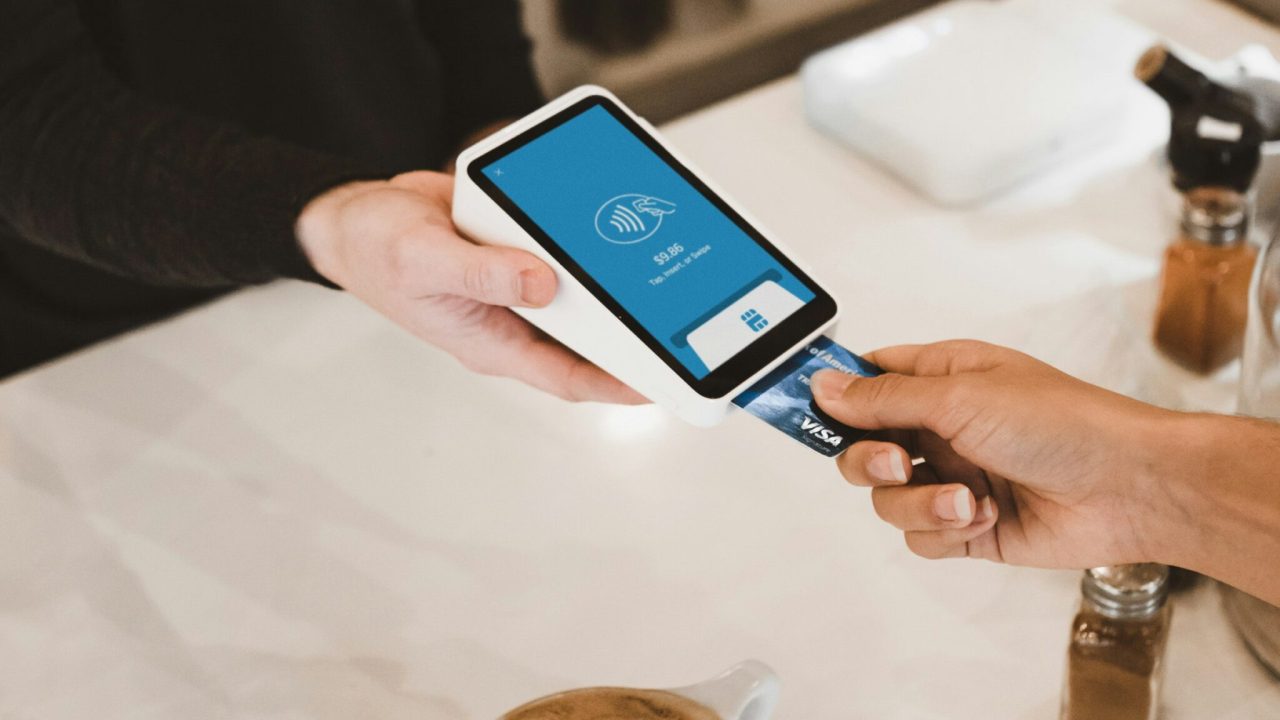

This guide is a comprehensive, state-by-state, network-by-network reference for US merchants who want to add a compliant credit card surcharge to recover card acceptance costs. It covers the federal framework, the rules of each card network, the law in all 50 states plus DC, step-by-step implementation, and the three legal alternatives to surcharging (dual pricing, cash discount, convenience fee).
If you operate in Texas, Florida, or any state where surcharge bans were struck down by federal courts, this guide is especially relevant. If you operate in California, Massachusetts, Maine, or Connecticut where surcharging is prohibited, the alternatives section shows the legal path forward.
What is a credit card surcharge?
A credit card surcharge is a fee that a merchant adds to a transaction when a customer pays with a credit card, but not when the customer pays with cash, debit, or other methods. The surcharge is calculated as a percentage of the transaction amount and is passed directly to the customer at the point of sale. Unlike a flat “convenience fee” that applies regardless of payment method, a surcharge is fundamentally tied to the merchant’s cost of accepting that specific card.
The mechanics are straightforward. When a customer makes a $100 purchase with a Visa credit card, and your surcharge is set at 2.5 percent, the customer is charged $102.50 total. That extra $2.50 goes directly toward offsetting the interchange and processing fees that Visa charges you as a merchant. The customer sees the surcharge on their receipt or checkout screen before authorizing the payment, giving them the choice to proceed or switch to another method.
This is distinct from several similar but legally and operationally different concepts that often create confusion:
Surcharge vs. Convenience Fee: A convenience fee typically applies universally across all payment methods (or multiple high-cost methods) and is legally treated as a service charge for non-standard acceptance channels, like accepting credit cards over the phone. A surcharge, by contrast, is card-network-specific and is framed as cost recovery. This distinction matters for compliance. Many states and card network rules permit surcharging but restrict or ban convenience fees.
Surcharge vs. Service Fee: A service fee is often an administrative charge for a specific service rendered, unrelated to card acceptance. A parking lot “service charge” or a payment plan “processing fee” are service fees. Surcharges are purely about passing through card acceptance costs.
Surcharge vs. Cash Discount: A cash discount is a price reduction offered to customers who pay with cash (or debit), leaving the standard price as the “surcharge” implicit. Legally and psychologically, they function similarly, but they frame the cost differently. Charging $102.50 with a 2.5 percent surcharge is often considered less adversarial than displaying $100 as the “cash price” and $102.50 as the “card price.” Both are legal in many jurisdictions, but the frame affects customer perception.
Surcharge vs. Dual Pricing: Dual pricing is a broader category that encompasses both surcharging and cash discounting as legal pricing strategies. Under dual pricing, merchants openly display two prices: one for card payments and one for cash payments. Surcharging is the card-side version of dual pricing.
Who pays and who decides: The customer pays the surcharge at checkout, but the merchant decides whether to implement one. The merchant also decides the surcharge percentage, subject to card network caps and state law limits. Card networks (Visa, Mastercard) set maximum surcharge percentages. Some states impose additional caps or outright bans. The customer has the choice: accept the surcharge and pay, or use a different payment method.
Why surcharges exist: Credit card acceptance is expensive. Interchange fees (set by card networks, typically 1.3 percent to 3 percent per transaction) are passed to the merchant, along with processor markups, gateway fees, and other acceptance costs. For businesses operating on thin margins, these costs are material. A restaurant with a 4 percent food cost margin cannot absorb a 2 percent processing cost without eroding profitability. Surcharging allows the merchant to recover those costs selectively from customers who choose the payment method that incurs them, rather than embedding those costs in cash prices for all customers.
In 2026, with interchange fees rising across card networks (Visa’s April 2026 interchange schedule update increased qualified transaction rates by 0.05 percentage points across most categories), surcharging has become a practical necessity for SMBs in cost-sensitive verticals like restaurants, retail, and gas stations. The economics are straightforward: surcharging can recover 85 to 100 percent of acceptance costs, improving net margins by 0.5 to 2 percentage points depending on the vertical and payment mix.
How federal law treats surcharging
The United States has no blanket federal prohibition on credit card surcharging. This was not always the case. From 1983 until 2013, the National Bankruptcy Act’s “Noerr-Pennington” exception and related judicial doctrine effectively prohibited surcharging under a federal restraint of trade theory. However, a 2013 class action settlement between Visa, Mastercard, and merchants changed the landscape entirely.
In that landmark settlement (part of the Visa/Mastercard Interchange Litigation), the card networks agreed to settle claims that they had illegally prohibited surcharging, effectively lifting the federal ban. Since 2013, surcharging has been legal at the federal level for credit card transactions. This opened a new market for merchants seeking to recover acceptance costs.
The Durbin Amendment (Dodd-Frank Act, Section 1075): Federal law does impose one clear surcharge restriction, but it applies only to debit cards, not credit cards. The Durbin Amendment, passed as part of the Dodd-Frank Wall Street Reform and Consumer Protection Act of 2010, explicitly prohibits merchants from imposing surcharges on debit card transactions. A merchant cannot add a percentage fee when a customer swipes a debit card, PIN or signature. This is a categorical federal ban on debit surcharges. The rationale was consumer protection: debit cards are more like checking accounts (regulated at the federal level by the Federal Reserve), whereas credit cards are considered credit products with higher costs to merchants. If you implement surcharging, your program must exclude debit cards entirely.
Military Lending Act (10 USC 987): The Military Lending Act contains provisions protecting service members from certain predatory financial practices. While the Act does not explicitly address surcharging, it requires that any charges imposed on military members comply with truth-in-lending standards. If a surcharge is imposed on a service member’s credit card transaction, the disclosure must be clear and in compliance with Regulation Z (discussed below). Practical implication: surcharge disclosures must be transparent and understandable, particularly for uniformed service members.
FTC Consumer Protection Framework: The Federal Trade Commission enforces consumer protection standards under the FTC Act Section 5. While the FTC does not outright prohibit surcharging, it scrutinizes unfair or deceptive practices. A surcharge presented ambiguously, hidden until final confirmation, or disclosed in small print could trigger FTC enforcement for unfair or deceptive conduct. The FTC’s guidance emphasizes that any surcharge must be clearly disclosed before the customer authorizes the transaction, and the amount must be transparent and accurately calculated.
Truth in Lending Act and Regulation Z: TILA (15 USC 1601 et seq.) and its implementing regulation, Regulation Z (12 CFR 1026), govern credit disclosures. For surcharges, the key requirement is that the surcharge amount and the total amount due (including surcharge) must be clearly disclosed before the customer is charged. If you are accepting credit cards online, the surcharge must appear in the checkout flow before final authorization. In-store, it must be visible on signage and on the receipt. Any ambiguity in the disclosure could be considered a TILA violation, making truth-in-lending compliance a practical foundation for any surcharge program.
The federal foundation: There is no federal cap on surcharge percentage (unlike state-level caps in a few states). There is no federal mandatory disclosure template mandated by statute, though Regulation Z and FTC guidance set a high standard for clarity. There is no federal registration requirement. What exists is a general prohibition on unfair or deceptive surcharge practices, enforced by the FTC and state attorneys general, combined with the categorical ban on debit surcharges under the Durbin Amendment and the transparency mandates of TILA/Reg Z. Merchants who implement surcharging must comply with federal debit exclusions and disclosure standards, or face FTC enforcement, private litigation, or state AG action.
States can impose stricter rules: The federal framework sets a floor, not a ceiling. Individual states are free to impose stricter rules on surcharging than federal law requires. Some states have banned surcharging entirely (Massachusetts, Maine, Connecticut, and California as of June 2024, following SB 478). Other states have imposed percentage caps (Colorado at 2 percent, Minnesota at 4 percent). Still others have ruled via federal court decisions that surcharging is permitted under state law (Texas, Florida, Kansas). Because of this patchwork, merchants operating in multiple states must audit state-by-state rules to ensure compliance.
Card network rules summary
While federal law permits surcharging, the card networks themselves (Visa, Mastercard, American Express, Discover) impose their own rules that are often stricter than law. Because merchants need the card networks’ authorization and settlement infrastructure to accept cards, these network rules function as contractual requirements that supersede federal baseline rules.
Visa: Caps surcharges at 3 percent of the transaction amount (or the actual cost of acceptance, whichever is less). Requires merchants to register their surcharge program with Visa before implementation. Mandates that surcharges be clearly disclosed to the cardholder before authorization. Prohibits surcharging on debit cards (mirroring the Durbin Amendment). Requires that the surcharge amount appear separately on the receipt, not bundled into the total.
Mastercard: Sets a 4 percent cap on surcharges, higher than Visa. Enforces both brand-level rules and product-level rules. For example, surcharges on commercial cards, corporate purchasing cards, and some co-branded products may face additional restrictions or must be approved at the product level. Like Visa, Mastercard prohibits surcharging on debit cards and requires clear pre-authorization disclosure.
American Express: Takes a different stance. Amex does not explicitly prohibit surcharging, but its rules require that any surcharge be applied equally across all payment methods. If you charge a 2.5 percent surcharge for Visa, you must charge at least 2.5 percent on Amex. This creates a “no differential pricing” rule, meaning you cannot favor one card network with a lower surcharge. This rule reflects Amex’s historical brand positioning as a premium card network; Amex users expect parity or preference, not a lower fee.
Discover: Follows a Visa-like model with a 3 percent cap. Requires registration and clear disclosure, and prohibits surcharges on debit products.
Network-level compliance is stricter than law: In practice, merchants must meet the strictest requirement between state law and card network rules. If Texas state law permits a 4 percent surcharge, but Visa caps at 3 percent, the merchant must cap at 3 percent to remain compliant with Visa’s rules. Violations of card network surcharge rules can result in loss of surcharge privileges, chargeback disputes, or termination of processing relationships.
Why this matters in 2026
Surcharging was once an obscure merchant strategy known only to high-volume operators in cost-sensitive industries. In 2026, surcharging has become mainstream, driven by three converging factors.
Interchange costs continue to rise: Visa’s April 2026 interchange schedule update increased qualified transaction rates by 0.05 to 0.15 percentage points across most categories. Mastercard has followed with comparable increases. For a restaurant processing $50,000 in monthly card volume, a 0.1 percentage point increase translates to $50 in additional monthly costs, or $600 annually. Surcharging allows merchants to immediately recoup these increases without raising prices for cash customers.
California SB 478 paradoxically drove adoption: California’s June 2024 ban on surcharging was intended to protect consumers. Instead, it created a contrast effect. Merchants in surcharge-friendly states saw the competitive advantage of cost recovery, while merchants in California faced margin compression. This visibility accelerated surcharging adoption nationwide. Survey data suggests approximately 30 percent of US SMBs now use some form of surcharging or dual pricing, up from under 15 percent in 2022.
Federal court rulings affirmed surcharging legality: Between 2015 and 2019, federal courts struck down state surcharge bans on First Amendment grounds in Florida (Dana’s Railroad Supply v. Florida Attorney General, 11th Circuit, 2015), Texas (Rowell v. Pettijohn line of cases, 5th Circuit and subsequent district court orders following the Supreme Court’s 2017 remand in Expressions Hair Design v. Schneiderman), and Kansas (CardX LLC v. Schmidt, District of Kansas, 2019). These decisions established that surcharging is protected commercial speech, subject only to state law caps and card network rules. This affirmation encouraged merchant adoption.
New York’s enforcement (February 2024): The New York State Attorney General’s office announced enforcement against non-compliant surcharging practices, citing violations of GBL Section 518. However, the enforcement was directed at deceptive disclosure practices (hidden surcharges, ambiguous wording), not surcharging itself. This clarified that the issue is disclosure transparency, not surcharging legality in New York. Merchants who disclose clearly remain protected.
Merchants evaluating surcharging in 2026 are operating in a stable, legally supported environment, provided they comply with state law, card network rules, and federal disclosure standards. The primary risk is not regulatory prohibition, but rather operational execution and customer perception.
Visa surcharge rules: complete merchant requirements
Visa is the card brand that wrote the modern surcharge playbook. Every other network (Mastercard, Discover, American Express) aligned its program to Visa’s framework after the 2013 antitrust settlement, so if you understand Visa’s requirements you understand 90 percent of what your processor is going to ask you to comply with. The authoritative source is the Visa Core Rules and Visa Product and Service Rules, April 18 2026 edition, sections 5.6.1 through 5.6.4. Read the actual document. Your acquirer will not warn you before they fine you.
The 3 percent cap
Visa caps the credit card surcharge at the lesser of two numbers: 3 percent of the transaction, or your actual merchant cost of acceptance for that specific Visa product. Note the word “lesser.” If your effective rate on a Visa Signature card is 2.4 percent, your maximum legal surcharge on that transaction is 2.4 percent, not 3.
You also need to pick a surcharging level and stick to it. Visa allows two options:
- Brand-level surcharging. You apply one flat surcharge to all Visa credit cards regardless of product (Traditional, Signature, Infinite, commercial).
- Product-level surcharging. You apply different surcharges to different Visa products based on what each product actually costs you to accept.
You cannot mix the two on the same merchant location. You pick one. In practice, about 95 percent of merchants pick brand-level surcharging at 3 percent flat. The math is simpler, the disclosure is cleaner, and the 3 percent ceiling is almost always below the true blended cost of acceptance on premium consumer credit (Signature and Infinite frequently run 2.7 to 3.1 percent all-in once you include assessments and processor markup).
The calculation method matters too. You can use an averaged cost across a representative trailing period, typically 12 months, or you can calculate surcharge transaction by transaction using the actual interchange and fees on that swipe. Averaged is what 95 percent of merchants do because real-time transaction-specific calculation requires processor support most platforms do not offer at the POS.
Registration requirement
Before you turn on a surcharge, you have to register. Visa requires every surcharging merchant to submit a Merchant Surcharge Notification Form to Visa and to the merchant’s acquirer at least 30 days in advance of the first surcharged transaction.
The flow goes like this:
- Merchant fills out the Visa Merchant Surcharge Notification Form (the current version is dated 2024 and is available through your acquirer).
- Merchant submits the form to the acquirer.
- Acquirer reviews and submits to Visa on behalf of the merchant.
- Visa logs the registration. The 30-day clock starts on submission.
Skipping registration is not a paperwork issue, it is a contract breach. Penalties include fines starting at 5,000 dollars per occurrence, escalation to 25,000 dollars for repeat or willful violations, and in serious cases termination of the merchant account with a placement on the MATCH (Member Alert to Control High-Risk Merchants) list. A MATCH listing makes it functionally impossible to open a new merchant account for five years.
Disclosure requirements
Visa is strict about disclosure. The rule is that the customer must know about the surcharge before they decide how to pay. Three places require disclosure.
- Entrance signage. A clear and prominent sign at the point of store entry stating that a surcharge applies to credit card transactions. Visa does not mandate exact wording, but the sign must identify the surcharge percentage and clarify that debit cards are not surcharged.
- Point of sale signage. A second clear and prominent disclosure at the checkout counter or POS terminal area, again before the customer hands over the card.
- Receipt line item. The surcharge must appear on the customer receipt as a separate line item, with the amount called out. It cannot be rolled into the subtotal or buried in a “fees” line.
For online checkout, the disclosure must appear on the payment selection page, before the customer chooses Visa over another payment method. Burying the disclosure on a confirmation page after the customer has committed is a violation.
Recommended wording that meets Visa’s expectations: “A 3% surcharge applies to credit card payments. This surcharge is not greater than our cost of acceptance. Debit cards are not surcharged.” Adjust the percentage if you are surcharging at a lower rate.
What Visa allows
- Surcharging Visa credit cards (consumer and commercial) up to the 3 percent cap.
- Different surcharge amounts across card brands, provided each amount reflects that brand’s actual cost of acceptance. If Mastercard costs you 2.1 percent and Visa costs you 2.4 percent, you can surcharge each accordingly.
- Brand-level surcharging at a uniform rate across all Visa credit products.
- Product-level surcharging that varies by Visa product tier.
What Visa does NOT allow
- Surcharging Visa debit cards. This is prohibited by the Durbin Amendment (federal law) and reinforced by Visa rule. Debit is off limits, period.
- Surcharging Visa prepaid cards. Same prohibition.
- Surcharging Visa credit cards at a rate higher than your surcharge on a competing brand at the same merchant location. If you surcharge Mastercard at 2 percent, you cannot surcharge Visa at 3 percent.
- Surcharging above the lesser-of cap (3 percent or actual cost of acceptance).
- Surcharging at all in states that prohibit the practice. As of 2026, that list is Connecticut, Massachusetts, Maine, and California (under SB 478, effective for businesses serving consumers, with active enforcement by the California Attorney General).
- Adding the surcharge to the subtotal before tax is calculated. Tax goes on the goods, the surcharge applies to the credit card portion separately.
Visa Surcharge Compliance Program
Visa runs an active compliance program that monitors surcharging merchants. The program uses mystery shoppers, transaction-data analysis, and consumer complaints to identify violations. Common findings: missing entrance signage, surcharge applied to debit, surcharge above the 3 percent cap, surcharge applied without registration on file.
The enforcement ladder runs warning letter, fine, fine escalation, account termination. Fines run 5,000 dollars to 25,000 dollars per occurrence and stack across categories. A merchant with missing entrance signage AND surcharge above cap is looking at two simultaneous violations.
Recent Visa rule updates (2024 to 2026)
The April 18 2024 amendments to the Visa Core Rules tightened the disclosure language and clarified that the 30-day registration notice runs from acquirer submission to Visa, not from merchant submission to acquirer. This is a meaningful change because some acquirers sit on paperwork for two to three weeks.
The April 2026 interchange schedule introduced new rate categories for certain commercial and rewards products. If you are using product-level surcharging, recheck your effective rates against the new schedule. Several merchants who set product-level surcharges in 2023 are now technically over the cap on a handful of card products because the interchange dropped.
The bottom line: register, disclose in three places, cap at 3 percent, never touch debit, and audit your effective cost of acceptance at least annually. Anything else is a fine waiting to happen.
Mastercard surcharge rules: what differs from Visa
The 4 percent cap
Mastercard allows merchants to surcharge up to 4 percent or the cost of acceptance (whichever is lower). This is more permissive than Visa’s strict 3 percent rule. The higher ceiling exists because Mastercard recognizes that some acceptance costs genuinely exceed 3 percent, especially in high-risk verticals (CBD, subscription, furniture, jewelry) where interchange rates run 2.5 to 3.5 percent before processor markups.
That said, most merchants still stick to 3 percent for surcharging. Why? Visa dominance in US consumer cards means customers expect and tolerate the 3 percent number. Surcharging at 4 percent triggers cart abandonment, customer confusion, and support calls. The safest play is uniform 3 percent across all brands, even if Mastercard technically permits higher.
Brand-level vs product-level surcharging
Visa requires uniform surcharges across all Visa products (credit, debit where allowed, corporate). Mastercard is more flexible. You can elect either:
Brand-level (simpler, recommended): Apply the same surcharge percentage to all Mastercard cards. One sign, one receipt line, one rate. This works for 95 percent of merchants.
Product-level (complex): Surcharge Mastercard credit at 3 percent, Mastercard world elite at 2 percent, Mastercard debit (where legal) differently. This requires explicit cardholder disclosure at point of sale and in terms, POS system configuration to detect card type, acquirer approval, and ongoing compliance monitoring.
The product-level option exists because Mastercard elite cards genuinely cost more to acquire. But the operational burden often exceeds the savings. Most merchants choose brand-level for simplicity and compliance peace of mind.
Registration requirement
Before you launch surcharging, notify your acquiring bank 30 days in advance. Mastercard does not require direct merchant filing to Mastercard like some card networks do. Instead, your acquirer reports your surcharging status to Mastercard’s compliance system, and Mastercard audits acquirer books quarterly.
Documentation matters. Keep your email to the acquirer, the date you started, and your signage photos. If Mastercard audits you during a chargeback ratio spike or compliance review, you will need proof that you notified the acquiring bank and that your disclosure was clear from day one.
Disclosure at point of sale
Four touchpoints require disclosure:
Entrance signage: A sign visible to all customers before they approach the register must state that a surcharge applies and the percentage. “Surcharge: 3% applied to credit card transactions” in clear text, no asterisks, no fine print. The sign must be legible from 3 feet away.
POS receipt: Every receipt must itemize the surcharge. If the transaction is 100 dollars, the receipt shows subtotal 100, surcharge 3 dollars, total 103 dollars. Not buried in a summary line. Explicit line item.
Verbal disclosure: If a customer asks, you must verbally confirm the surcharge percentage. Train staff to answer “yes, we apply a 3 percent surcharge to credit card transactions” without hesitation.
Digital checkout (e-commerce): Disclose surcharge at cart, again at payment method selection, and once more at checkout review before the customer completes the transaction. No surprises at the final confirmation.
What Mastercard prohibits
Mastercard and federal law (Regulation Z, Durbin Amendment) restrict surcharging:
Debit card surcharging is banned. Federal law prohibits surcharging on PIN-debit. Some states technically allow debit surcharging, but Mastercard network rules override state law. Do not surcharge debit.
Prepaid card surcharging is also prohibited. Gift cards, reloadable prepaid, payroll cards do not qualify.
Mastercard-only surcharging while other brands go free is forbidden. You cannot surcharge Mastercard at 3 percent and Visa at 0 percent. If you surcharge, the same percentage applies to Visa and Amex (discovery varies by state).
You cannot exceed cost of acceptance. If your true cost to accept Mastercard is 2.1 percent, you cap surcharges at 2.1 percent, not 4 percent.
Mastercard surcharge compliance enforcement
Mastercard monitors merchant surcharging compliance through acquirer-led audits, complaint patterns, and chargeback data. If Mastercard detects frequent cardholder disputes tied to undisclosed or excessive surcharging, it escalates to your acquirer, who carries primary responsibility for verifying your disclosure setup.
Penalties parallel Visa: warning letters, temporary increased monitoring, fines of 500 to 5,000 dollars per violation, or account termination if violations are systemic. Mastercard tightened surcharge oversight through 2024 and 2025, citing merchant abuse (hidden surcharges, misleading signage). Expect the same intensity in 2026.
Note: Mastercard also runs a Site Data Protection (SDP) program, but SDP covers PCI cardholder data security obligations, not surcharge compliance specifically. The two programs are distinct.
Mastercard interchange updates 2026
Mastercard published its April 2026 interchange schedule update in March 2026. Key changes:
Several restaurant, food service, and fuel categories saw increases between 0.02 and 0.08 percent. These shifts change the “cost of acceptance” baseline your surcharge cap rests on. A gas station that calculated surcharge at 2.0 percent six months ago may now legally claim 2.15 percent under cost-of-acceptance logic.
Categories most affected: restaurant (all QSR and full-service codes), quick-service food, specialty fuel, and healthcare (pharmacy and medical telehealth). If you operate multiple verticals, recalculate cost of acceptance quarterly using your statement.
To stay compliant, pull your latest merchant statement from your acquirer, find the interchange-plus rates for your category, add processor markup, and that sum is your cost of acceptance ceiling. Document the math. Mastercard audits this calculation.
Comparison: Visa vs Mastercard surcharge rules side-by-side
| Factor | Visa | Mastercard |
|---|---|---|
| Surcharge cap | 3 percent or cost of acceptance | 4 percent or cost of acceptance |
| Flexibility | Brand-level only | Brand-level or product-level |
| Notification | Within 30 days to acquirer; no Visa filing | 30 days to acquirer; Mastercard audit quarterly |
| Receipt requirement | Line-item mandatory | Line-item mandatory |
| Signage | Required at POS and entrance | Required at POS and entrance |
| Debit surcharging | Prohibited (Durbin overrides state law) | Prohibited (network rules override state) |
| Prepaid surcharging | Prohibited | Prohibited |
| Across-brand consistency | Required | Required |
| Documentation | Email to acquirer + signage photos | Email to acquirer + statement math |
| Enforcement program | VAMP (Visa Acquirer Monitoring Program) | Acquirer-led surcharge audits + Mastercard rule enforcement |
| Fine range (per violation) | 500 to 5,000 dollars | 500 to 5,000 dollars |
Both networks are tightening enforcement in 2026. The practical difference: Mastercard’s 4 percent ceiling is higher, but few merchants use it. Brand-level surcharging at 3 percent satisfies both Visa and Mastercard, so most merchants standardize there.
Sources: Mastercard Operating Regulations (mastercard.com/merchants), Merchant Rules and Standards Manual (section 5.10 Surcharge Program); Visa Core Rules (2026 edition).
American Express surcharge rules
The Amex differential rule
American Express prohibits merchants from surcharging American Express cards unless the same surcharge is applied to other card brands at the same or greater level. This is the fundamental constraint: if you surcharge Visa at 3 percent, you must surcharge Amex at 3 percent or less, never more. The regulatory logic is brand protection. If you do not surcharge Visa or Mastercard, you cannot surcharge Amex at all. This creates a symmetry requirement that sets Amex apart from other networks and forces merchants into either a surcharge-all or surcharge-none approach when Amex cardholders are involved.
Why Amex is stricter (historical context)
Amex maintained stricter surcharging rules than Visa and Mastercard for two structural reasons: merchant fee levels and brand positioning. Historically, Amex assessed merchant fees between 2.5 and 3.5 percent, compared to 1.5 to 2.5 percent for Visa and Mastercard. This gap created merchant resentment, but also gave Amex a financial moat. The brand equity angle mattered more to Amex’s strategy. Amex positioned itself as the premium card, used by affluent cardholders and high-value consumers. Allowing surcharging would undermine that perception, signaling to consumers that Amex cards cost more to use. The 2018 Supreme Court ruling in Ohio v. American Express Co. (a case brought by the Department of Justice and eleven states, decided 5 to 4 on June 25, 2018) upheld Amex’s anti-steering rules, which prevented merchants from steering customers toward cheaper payment methods. This ruling reinforced Amex’s latitude to enforce its merchant rules, because the court recognized Amex’s need to protect its two-sided platform.
Amex disclosure requirements
If you elect to surcharge Amex cards (which means surcharging all brands at the same or higher level), Amex requires three disclosure touch points: signage at your entrance and at the POS terminal, itemized receipt display showing the surcharge amount and rate, and online disclosure before card selection (for ecommerce). The signage must inform customers in advance that a surcharge will be applied. The receipt must break out the surcharge separately from the transaction total. Ecommerce requires clear communication on the payment selection page, not hidden in terms and conditions. Noncompliance does not result in immediate termination, but sustained violations trigger warnings, corrective action plans, and eventually acceptance termination.
Amex OptBlue program impact
Amex launched OptBlue in 2018 to allow small merchants to process Amex through Visa and Mastercard acquirers (typically Visa’s FDR or Mastercard processors like Chase Paymentech). Merchants on OptBlue inherit Visa’s 3 percent surcharge cap and disclosure rules, effectively lowering Amex’s enforcement position for those merchants. If your merchant account is on OptBlue, follow Visa rules, not Amex rules, for surcharging (i.e., the 3 percent cap applies). Verify with your processor whether your Amex is through direct Amex settlement or OptBlue, because the rules diverge.
Penalties for non-compliance
Amex penalties for surcharging violations include acceptance termination (losing the ability to accept Amex cards), mandatory refunds of improperly collected surcharges to cardholders, and chargebacks filed on behalf of customers. Amex rarely assesses monetary fines directly, but the cost of refunds plus lost Amex volume makes compliance worthwhile. Amex’s enforcement is incident-based: a customer complaint or audited violation can trigger a full chargeback reversal.
Discover surcharge rules
General framework
Discover Card adopts surcharging rules broadly aligned with Visa, with minor flexibility in cap calculation and enforcement. The maximum surcharge on Discover cards is 3 percent of the transaction value or the cost of acceptance, whichever is less. Brand-level surcharging is allowed (i.e., you can surcharge Discover but not Visa if you wish), unlike Amex. Prepaid Discover cards are not surcharge-exempt, meaning you can surcharge them at the same rate as branded Discover. This flexibility makes Discover easier to manage than Amex but requires careful compliance with the same disclosure rules as Visa.
Registration with Discover
Unlike Visa and Mastercard, Discover does not mandate a 30-day advance notice to the network itself, but your acquiring bank or processor must notify Discover of your surcharging program within 30 days of start. You do not file directly with Discover; your acquirer handles the registration. If you switch processors, the new processor must re-register your surcharging status. Verify that your onboarding checklist includes this step.
Disclosure and signage
Discover requires the same disclosure standards as Visa: entrance signage, POS terminal notice, itemized receipts, and (for online) pre-checkout notification. Discover does not require a specific format or logo placement, so you can use unified signage that covers Visa, Mastercard, and Discover together. The key is that customers know a surcharge exists before they complete the transaction.
Where Discover differs
Discover is slightly more permissive in how you calculate the “cost of acceptance” cap. Visa strictly defines cost as interchange plus assessments; Discover allows merchants to include certain gateway and processing fees in the cost calculation, which can raise the effective cap above 3 percent in some cases. Discover’s enforcement is also less aggressive than Visa’s. Discover processes fewer complaints and conducts fewer audits, meaning compliance gaps are less likely to be detected. However, relying on lax enforcement is poor risk management; treat Discover the same as Visa.
Quick reference: 4-network surcharge comparison table
| Aspect | Visa | Mastercard | American Express | Discover |
|---|---|---|---|---|
| Maximum surcharge | 3 percent or cost | 4 percent or cost | Same as lowest other | 3 percent or cost |
| Debit card surcharge allowed | No (prohibited) | No (prohibited) | No (prohibited) | No (prohibited) |
| Prepaid surcharge allowed | No | No | No | Yes |
| Brand-level surcharging | Yes (can surcharge one brand only) | Yes | No (must surcharge all equally) | Yes |
| Product-level surcharging | Restricted | Allowed with disclosure | Restricted | Restricted |
| Registration required | Yes (30 days advance) | Yes (30 days advance) | No explicit requirement | Yes (30 days, via acquirer) |
| Differential/parity rule | No | No | Yes (strict) | No |
| Typical penalty for violation | Fines $500 to $25,000, termination | Fines $500 to $5,000, termination | Chargeback, refund, termination | Chargeback, termination |
| Enforcement intensity | Very high | High | High | Moderate |
Sources and regulatory anchors
The guidance in this section synthesizes current rules from:
– American Express Merchant Regulations and Merchant Compliance Manual (americanexpress.com/us/merchant)
– Discover Network Operating Regulations Section 6 (discovernetwork.com)
– Visa Inc. Core Rules and Visa Rules updates (surcharge 3 percent cap effective 2013, reaffirmed 2024)
– Mastercard Rules and Mastercard Operating Regulations (surcharge 4 percent cap effective 2015)
These rules are current as of May 2026 and subject to change. Consult your processor’s compliance team before launching or modifying a surcharging program, as network rules are updated quarterly and regional state laws override federal network rules in ban states (California, Connecticut, Massachusetts, Maine) and restricted states (Colorado, Minnesota).
States that prohibit credit card surcharging
If your business operates in Massachusetts, Connecticut, Maine, or California, the rules change completely. These four states still ban credit card surcharging outright at the consumer-protection level, even after the wave of court rulings that struck down similar bans in New York, Florida, Texas, and Kansas on First Amendment grounds. The bans in these four states remain on the books, are actively enforced, and carry real penalties.
This section explains exactly what is illegal, what is still legal (cash discount and dual pricing programs), and the compliance mistakes that get merchants in these states fined.
Massachusetts (full ban)
Massachusetts has one of the oldest and strictest surcharge bans in the country. The prohibition lives in MGL Chapter 140D Section 28A, which states that no seller may impose a surcharge on a buyer who pays by credit card instead of cash, check, or similar means.
Key facts for Massachusetts merchants:
- The ban has been in place since 1981 and has survived every federal court challenge.
- Enforcement is handled by the Office of the Attorney General under MGL Chapter 93A (Consumer Protection Act).
- Penalties run up to $5,000 per violation, plus restitution to affected customers, plus attorney fees.
- The AG’s office has issued cease-and-desist letters and settlements in recent years, with a focus on auto dealers, professional services, and restaurants adding card surcharges at checkout.
- A class action exposure exists under Chapter 93A, which allows treble damages for willful violations.
What is still legal in Massachusetts:
- Cash discount programs are explicitly permitted. The mechanism is different: you raise your posted price and offer a discount for cash payment. The displayed price must be the credit price, and the cash discount must be clearly disclosed.
- Dual pricing is legal when both prices are posted upfront on every item or menu. The customer sees the cash price and the card price before deciding how to pay. There is no fee added at the register, which is the technical distinction that keeps it lawful.
If you are running a credit card surcharge in Massachusetts today, you are exposed. Switch to a properly structured cash discount or dual pricing program. ProTech Payments builds compliant programs for Massachusetts merchants on processors that handle the disclosure and signage requirements automatically.
Connecticut (full ban)
Connecticut prohibits credit card surcharging under Conn. Gen. Stat. Section 42-133ff. The statute reads bluntly: no seller may impose a surcharge on a buyer who elects to use a credit card in lieu of cash, check, or similar means.
Key facts for Connecticut merchants:
- Civil penalty of up to $500 per violation, enforced by the Department of Consumer Protection and the Attorney General.
- The Connecticut AG has flagged surcharging as an enforcement priority several times in the last five years, particularly after the 2023 Visa rule changes confused merchants into thinking the state-level ban no longer applied.
- The Department of Banking has confirmed publicly that the federal court rulings in other states do not affect Connecticut’s statute.
What is still legal in Connecticut:
- Cash discount: allowed, same mechanism as Massachusetts (post the credit price, discount for cash).
- Dual pricing: allowed when both prices are clearly displayed before the transaction.
- The statute specifically carves out the cash discount as not being a surcharge, which is the legal foundation for compliant programs.
The Connecticut AG has pursued small merchants as well as large operators. Per-violation math adds up fast: 200 transactions a day with a surcharge added equals 200 violations a day in theory. Even with conservative enforcement discretion, settlements have run into five and six figures for repeat offenders.
Maine (full ban)
Maine bans credit card surcharges under Title 9-A Section 8-509 of the Maine Consumer Credit Code. The language mirrors the Massachusetts and Connecticut statutes: no seller in a sales transaction may impose a surcharge on a cardholder who elects to use a credit card in lieu of payment by cash, check, or similar means.
Key facts for Maine merchants:
- Enforced by the Maine Bureau of Consumer Credit Protection, which has published merchant guidance reaffirming the ban every time a federal court ruling in another state hits the news.
- Penalties under the Maine Consumer Credit Code can include civil fines, restitution, and license consequences for regulated industries (auto dealers, finance companies).
- The Bureau has the authority to refer cases to the Maine AG for further action.
What is still legal in Maine:
- Cash discount: permitted.
- Dual pricing: permitted when both prices are posted upfront.
- The Bureau of Consumer Credit Protection has confirmed in written guidance that cash discount programs are not surcharges under Maine law.
Maine is a smaller market in absolute volume, but the Bureau is responsive to consumer complaints and merchants who add card fees at the register tend to get flagged within weeks. The path forward is the same: cash discount or dual pricing.
California (post-SB 478, July 1 2024)
California is the most complicated of the four ban states because two statutes now stack on top of each other.
The original prohibition is in California Civil Code 1748.1, which has prohibited credit card surcharges in California since 1985. Like the East Coast bans, it explicitly allows a cash discount.
On top of that, SB 478, the Honest Pricing Law (also called the “junk fee” law), took effect July 1 2024. It amended Civil Code 1770 to prohibit advertising, displaying, or offering a price for a good or service that does not include all mandatory fees or charges. Surcharges, service fees, and any other unavoidable add-on must now be included in the advertised price.
What this means in practice for California merchants:
- Credit card surcharging is illegal under CC 1748.1 (no change from before).
- Even if surcharging were allowed, SB 478 would require the surcharge to be baked into the displayed price, which defeats the entire point of a surcharge as a separately disclosed fee.
- The law was authored to target hidden fees in hotels, ticketing, food delivery, and short-term rentals, but the language is broad enough to capture any unavoidable add-on at point of sale.
- AG Rob Bonta has named SB 478 enforcement a public priority and issued FAQ guidance in May 2024 clarifying scope.
- After restaurant industry pushback in spring 2024, SB 1524 was passed to exempt mandatory restaurant service charges and auto-gratuities, provided they are clearly disclosed on menus. This exemption does NOT extend to credit card surcharges.
Penalties under California’s Consumers Legal Remedies Act and Unfair Competition Law:
- Civil penalties of up to $1,000 per violation under the CLRA.
- Restitution and injunctive relief.
- Significant class action exposure. Plaintiffs’ firms have already filed dozens of SB 478 cases in the second half of 2024.
- Statutory damages of $1,000 per affected consumer in some CLRA actions, which scales fast.
What is still legal in California:
- Cash discount programs structured under CC 1748.1: legal, with the same posted-credit-price-minus-discount mechanism.
- Dual pricing: legal but must be carefully structured to comply with SB 478. The safest format is to display both the cash price and the card price on every shelf tag, menu, and online listing, so the customer sees the full applicable price before deciding to transact. There is no “fee” at the register because both prices are advertised upfront.
California merchants currently running a surcharge program are exposed on two fronts at once: the original surcharge ban and the new junk fee law. Switching to a properly structured dual pricing program is the standard remediation path.
What merchants in ban states CAN do
All four ban states (MA, CT, ME, CA) explicitly permit these alternatives:
- Cash discount programs. Post the credit card price as the regular price. Offer a discount when the customer pays cash. The discount must be clearly disclosed at the point of sale and on the receipt. The credit card price is what gets quoted, advertised, and rung up by default.
- Dual pricing. Display two prices on every shelf tag, menu line, and online product page: the cash price and the card price. The customer chooses before the transaction begins. No fee is added at checkout because both prices are advertised in advance.
- Membership or club pricing. Build the processing cost into a membership tier with different price points.
- Adjust list prices. Raise your overall prices by 2 to 3 percent to absorb processing cost, and offer no discount. Less elegant but always legal.
Common compliance mistakes
These are the patterns that get merchants in ban states fined:
- Relabeling a surcharge as a “convenience fee.” Convenience fees have a narrow, specific legal meaning (a fee for using a non-standard payment channel, like paying a utility bill online when in-person check is the standard channel). Calling a register-level card surcharge a “convenience fee” does not change its legal character. Regulators and courts look at function, not label.
- Online-only surcharging. Some merchants assume the bans only apply to brick-and-mortar transactions. They do not. All four state statutes apply to any sale within the state, including e-commerce shipped to in-state addresses.
- “Service fee” branding. Particularly in California after SB 478, calling a credit card add-on a “service fee” pulls the merchant squarely into junk fee territory. Unless the fee is included in the displayed price, it is unlawful.
- Switching to surcharge first, asking compliance questions later. The Visa, Mastercard, and Discover rule changes in 2023 led many ISOs to push surcharging programs to merchants in ban states. The card brand rules permit surcharging up to 3 percent at the network level. State law is a separate layer. The card networks do not preempt state consumer-protection statutes.
- Assuming the federal court rulings in other states applied nationally. The Expressions Hair Design (NY), Dana’s Railroad Supply (FL), Rowell (TX), and CardX (KS) rulings struck down those specific state statutes on First Amendment grounds. They did not invalidate the MA, CT, ME, or CA statutes, which remain enforceable.
If you are a merchant in Massachusetts, Connecticut, Maine, or California and want to legally offset your processing cost, the path is a properly structured cash discount or dual pricing program. Talk to ProTech Payments about a compliant setup for your state. We build programs that survive an AG review, not ones that hope for enforcement discretion.
States with surcharge caps and disclosure requirements
Colorado (2 percent cap, January 1 2022)
Colorado became one of the first states to legally cap credit card surcharges when HB 21-1099 took effect. The law sets a maximum surcharge of 2 percent of the total transaction amount for credit and charge cards only. Debit cards are entirely exempt from surcharge allowances, so merchants cannot legally impose any surcharge on PIN debit or signature debit transactions in Colorado.
The statute requires disclosure at the point of sale and on the receipt. A merchant must prominently display the surcharge either on the terminal screen before authorization or on a sign immediately before the transaction is processed. The receipt must clearly itemize the surcharge amount separately. A violation carries civil liability, with the Colorado Attorney General empowered to pursue enforcement actions against merchants who exceed the cap or fail to disclose.
Colorado’s cap is one of the strictest in the nation, second only to Massachusetts. Because the law exempts debit cards, merchants often use dual pricing strategies (a lower price for debit, higher for credit) to offset revenue loss.
The effective date of January 1, 2022 has now passed, so any new merchant account applications in Colorado must comply immediately. Merchants operating in Colorado who previously allowed surcharges above 2 percent face back-liability risks if customers file complaints with the AG office.
Key statute: Colorado HB 21-1099 (C.R.S. 12-110-122)
Minnesota (5 percent cap historic, 4 percent practical via Visa rules)
Minnesota has taken an unusual approach to surcharge regulation. The state statute, Minn. Stat. 325G.051, technically permits surcharges up to 5 percent of the transaction amount. However, the practical cap has become 4 percent because Visa and Mastercard network rules impose tighter restrictions on their cards.
When state law and card network rules conflict, the stricter rule applies. A merchant processing a Visa card in Minnesota cannot legally impose more than Visa’s network cap (3 percent for credit), even though Minnesota law theoretically allows 5 percent. This creates compliance complexity because merchants must track which network the customer’s card belongs to and apply the correct cap per transaction.
Disclosure is mandatory. The surcharge must be clearly stated before the customer commits to the transaction. Many Minnesota merchants use signage and terminal displays to disclose the surcharge amount. The state has not aggressively enforced surcharge violations in recent years, but merchants who operate in Minnesota should maintain compliance records in case of customer disputes.
Because of the gap between state law (5 percent) and network caps (3 to 4 percent), Minnesota is effectively a 3 percent state for Visa and 4 percent for Mastercard. The state’s approach reflects early surcharge legislation that predates modern network rules.
Key statute: Minnesota Stat. Section 325G.051
New York (cost of acceptance, GBL Section 518)
New York fundamentally changed its surcharge law with amendments effective February 11, 2024. The state moved from a soft ban on surcharges to a cost-of-acceptance standard under General Business Law Section 518. This shift created new compliance obligations and sparked enforcement activity from the New York Attorney General’s office throughout 2024 and 2025.
The cost-of-acceptance standard means a merchant cannot charge more than the actual cost incurred to accept that specific card payment method. If Visa charges 2.2 percent and Mastercard charges 2.0 percent, a merchant cannot impose a single surcharge of 2.5 percent on both cards. The law requires differentiation by card type, card network, and in some cases card tier (business cards cost more than consumer cards).
New York law allows two pricing methods. First, a merchant can post the card price (the higher price) and offer a cash discount below it, with the cash price clearly marked. Second, a merchant can display two prices side by side, clearly labeling one as “card price” and the other as “cash price.” Both methods must be visible before the transaction.
The law explicitly prohibits merchants from using the term “convenience fee” as a workaround. A convenience fee typically applied to alternative payment methods like third-party payment processors or invoice payment links is allowed, but a convenience fee applied to credit card payments is a surcharge in disguise and violates the cost-of-acceptance requirement.
Penalties are significant. A violation can result in fines up to 500 dollars per violation, which many prosecutors interpret as per transaction. The New York Attorney General’s office has published enforcement guidance targeting restaurants, retail businesses, and online merchants. During 2024 and 2025, the AG office focused on restaurants that were using single fixed surcharges without disclosing the actual cost basis. The guidance clarifies that a merchant with documented proof of cost (interchange statements, processor fees) can defend higher surcharges, but generic surcharges without cost justification are violations.
Recent guidance for restaurants clarifies that delivery orders, takeout, and dine-in can have different surcharge costs because delivery services charge different fees than in-person payment terminal transactions. A restaurant using a food delivery app may legitimately charge a higher surcharge on delivery orders to reflect the app’s fee.
Key statute: New York General Business Law Section 518 (effective February 11, 2024)
New Jersey (cost of acceptance, 2023 law)
New Jersey codified cost-of-acceptance surcharging rules via legislation effective 2023. The state’s approach mirrors New York’s framework but has distinct disclosure and penalty structures. Like New York, New Jersey requires merchants to justify surcharges based on actual costs of accepting that payment method.
The effective cap is approximately 4 percent in practice, though the statute does not hard-cap the amount. Instead, it defines the maximum allowable surcharge as the actual cost of acceptance for that specific card type and network. A merchant’s processor statement becomes the primary evidence document. If a Visa credit card costs the merchant 2.3 percent to process, the merchant can legally surcharge up to that amount. If the merchant surcharges 3 percent on a Visa card that costs 2.3 percent to process, that 0.7 percent markup violates New Jersey law.
Disclosure requirements are strict. A merchant must display signage at the entrance to the physical location, at the point of sale (terminal or checkout counter), and on the receipt. The language must specify the surcharge amount or percentage, the card types to which the surcharge applies, and ideally the cost-of-acceptance basis. Online merchants must disclose before the final confirmation page.
New Jersey’s penalty structure is less documented than New York’s, but violations can result in civil action and consumer protection complaints. The state’s Attorney General maintains a consumer fraud hotline where customers report surcharge violations. Unlike New York, New Jersey has not published specific 2024-2025 enforcement cases, but merchants in the state should assume the legal environment mirrors New York’s aggressive enforcement posture.
Key statute: New Jersey cost-of-acceptance surcharge law (effective 2023)
Nevada (cost of acceptance, AB 359)
Nevada Assembly Bill 359, effective 2021, established cost-of-acceptance surcharging rules. Like New York and New Jersey, Nevada does not set a hard dollar cap but requires surcharges to reflect the documented cost of accepting that payment method. Nevada’s AG office published guidance clarifying how merchants should calculate and disclose surcharges.
A merchant in Nevada must obtain and retain documentation of the cost to accept each payment method. Bank statements, processor fee schedules, and interchange documentation serve as evidence. The Attorney General’s office expects merchants to be able to produce this documentation if challenged. A merchant who cannot justify a surcharge amount via cost documentation faces potential violations.
Disclosure language in Nevada must be clear and conspicuous. The statute requires disclosure before the transaction is authorized. Many Nevada merchants post signage at the register or on the website stating the surcharge and, ideally, the cost basis. The guidance does not mandate specific language, but the surcharge must be separate from any tips, taxes, or other fees.
Nevada’s enforcement environment has been lighter than New York’s, with no published AG enforcement actions in 2024-2025 related to surcharges. However, the law remains on the books and violations can trigger civil actions by the Attorney General or private consumer lawsuits. Nevada merchants operating in other states should ensure their surcharge programs comply with the most restrictive state law they operate in.
Key statute: Nevada AB 359 (effective 2021)
South Dakota (4 percent cost-based cap)
South Dakota enacted cost-of-acceptance surcharging legislation in 2021, establishing a practical cap of 4 percent tied to documented costs. The law requires merchants to disclose surcharges with specific web-based notification requirements, reflecting South Dakota’s emphasis on online transparency.
The statute permits surcharges only up to the actual cost of accepting that payment method, with 4 percent functioning as the practical maximum. A merchant must have processor documentation justifying the surcharge amount. Unlike Colorado’s flat 2 percent cap, South Dakota allows higher surcharges if the merchant can prove higher processing costs.
Web disclosure requirements are specific to South Dakota. For online merchants, the surcharge must be clearly disclosed on the website before checkout, at the checkout page, and on the receipt. The notification must be distinct from any other fees. For in-store merchants, signage at the entrance and POS location satisfies the requirement. South Dakota does not mandate a specific notification method, but the disclosure must occur before the customer commits to the purchase.
South Dakota is a merchant-friendly state overall, with lighter enforcement than New York or New Jersey. The AG office has not published recent enforcement guidance (2024-2025), suggesting low complaint volume or enforcement prioritization. However, the statute is enforceable, and merchants should maintain cost documentation to defend any surcharge disputes.
Key statute: South Dakota 2021 cost-of-acceptance surcharge law
Nebraska (cost of acceptance)
Nebraska’s statute permits surcharging under a cost-of-acceptance framework, allowing merchants to charge up to the documented cost of accepting a payment method. The law requires clear disclosure but does not specify a percentage cap, instead tying the allowable surcharge to actual processor costs.
Government transactions are exempt from surcharging rules in Nebraska. A merchant cannot impose a surcharge on payments from state or local government agencies, even if the merchant’s processing costs are higher for such transactions. This exemption reflects broad public policy favoring transparent government spending.
The statute carries a civil action penalty structure. If a merchant violates Nebraska’s surcharge disclosure requirements or imposes a surcharge exceeding documented costs, the Attorney General or an individual customer can pursue a civil action. The statute does not specify monetary penalties, but civil litigation can be costly to defend and result in court-ordered refunds to customers.
Nebraska’s enforcement environment is under-documented compared to New York or New Jersey, but merchants should assume compliance obligations are equivalent to other cost-of-acceptance states. A merchant in Nebraska should document costs, disclose surcharges clearly, and maintain records in case of dispute.
Georgia (cost of acceptance, HB 1283 amendments)
Georgia amended its surcharge laws with HB 1283, effective 2022, introducing cost-of-acceptance surcharging rules. The law permits surcharges up to the actual cost of accepting that payment method, with clear disclosure requirements.
The statute’s language on cost-of-acceptance is brief compared to New York’s detailed guidance. Georgia law defines the maximum surcharge as the cost of acceptance, but Georgia’s Attorney General has not published detailed interpretive guidance (as of 2026). Merchants in Georgia typically document their processor fees, interchange costs, and assessment fees as evidence of cost-of-acceptance.
Disclosure rules require clarity at the point of sale and on receipts. A merchant must inform the customer of the surcharge before the transaction is authorized. For online transactions, disclosure before checkout satisfies the requirement. The law does not mandate specific wording, but the surcharge must be separate from other fees.
Georgia’s enforcement posture has been light compared to New York or New Jersey. No high-profile enforcement actions or settlements have been published (as of 2026). However, the statute remains enforceable, and merchants should maintain compliance documentation. Georgia businesses serving national customers should comply with New York’s stricter standards if they operate across multiple states.
Key statute: Georgia HB 1283 (effective 2022)
Comparison table: cap states at a glance
| State | Max surcharge | Legal basis | Effective date | Primary penalty | Enforcement 2024-25 |
|---|---|---|---|---|---|
| Colorado | 2 percent (flat cap) | HB 21-1099 (C.R.S. 12-110-122) | January 1, 2022 | Civil action by AG | Minimal activity |
| Minnesota | 4 percent (network cap practical) | Minn. Stat. 325G.051 | Existing statute | Not documented | Not documented |
| New York | Cost of acceptance | GBL Section 518 (amended Feb 2024) | February 11, 2024 | Up to 500 dollars per violation | Active enforcement (restaurants, retail) |
| New Jersey | Approximately 4 percent (cost-based) | 2023 cost-of-acceptance law | 2023 | Consumer protection suit | Presumed enforcement per NY model |
| Nevada | Cost of acceptance (no hard cap) | AB 359 | 2021 | Civil action by AG | No published cases |
| South Dakota | 4 percent (cost-based, practical) | 2021 surcharge law | 2021 | Not explicitly stated | No published enforcement |
| Nebraska | Cost of acceptance (no hard cap) | State statute | Existing | Civil action by AG or private party | No published enforcement |
| Georgia | Cost of acceptance (no hard cap) | HB 1283 | 2022 | Not explicitly stated | No published enforcement |
Strategic takeaways for multi-state merchants
A merchant operating across Colorado, Minnesota, New York, and other cap states faces complex compliance requirements. Colorado’s 2 percent hard cap is the strictest. New York’s cost-of-acceptance standard with active AG enforcement (effective February 2024) is the most operationally complex. The remaining states (Nevada, South Dakota, Nebraska, Georgia) permit cost-of-acceptance surcharging with lighter enforcement.
The practical strategy for a merchant serving customers nationwide is to adopt the most restrictive state’s rules as the baseline, then apply higher surcharges only in merchant-friendly states where compliance documentation supports it. A merchant can operate a national surcharge policy (“2 percent surcharge on all cards”) that complies with Colorado’s cap, then increase surcharges in New York only if interchange documentation justifies cost-of-acceptance above 2 percent. This approach reduces operational complexity and minimizes compliance risk.
Merchants should request cost documentation from their processor, such as interchange schedules and assessment fee breakdowns. This documentation becomes the defense against AG enforcement in New York, New Jersey, and other cost-of-acceptance states. Without cost documentation, surcharges are difficult to justify legally.
Disclosure language should be clear, distinct from other fees, and displayed before the customer commits to payment. The simplest disclosure states the surcharge as a percentage or dollar amount and the reason (“Credit card surcharge: 2 percent to offset processing costs”). Longer explanations are not required but can improve transparency and reduce customer friction.
The enforcing authorities in cap states are state attorneys general, primarily through consumer protection divisions. New York’s enforcement activity in 2024-2025 signals that other cost-of-acceptance states may increase enforcement. Merchants should audit their surcharge compliance annually and document the cost basis for surcharges if challenged.
States where federal courts ruled surcharge bans unconstitutional
A handful of states walked into the surcharge debate with explicit statutory prohibitions on the books, and then watched federal courts dismantle those prohibitions on First Amendment grounds. Texas, Florida, and Kansas are the three clearest examples. For merchants in those states, the practical reality is dramatically different from what the statute book suggests. The law says one thing, the courts say another, and the card networks impose a third overlapping set of rules. This section explains exactly where the line sits today, with a particular focus on Texas because that is the home state of ProTech Payments and where we have processed the largest volume of surcharge implementations.
Texas (Fifth Circuit ruling, 2018)
Texas Business and Commerce Code Section 604A.0021 originally banned merchants from imposing a surcharge on a customer who elected to pay with a credit or debit card rather than cash, check, or similar means. The statute mirrored the older anti-surcharge laws written in the wake of the 1984 sunset of the federal Cash Discount Act, when several states adopted near identical language.
In Rowell v. Pettijohn, the Fifth Circuit Court of Appeals had originally upheld Section 604A.0021 in 2015 against a First Amendment challenge. The Supreme Court’s 2017 decision in Expressions Hair Design v. Schneiderman, which treated New York’s nearly identical surcharge ban as a regulation of commercial speech rather than pure price regulation, changed the analytical framework. After remand, the Fifth Circuit and the district court walked back the earlier reasoning, and by 2018 the Texas statute was treated as unenforceable on First Amendment grounds.
The current status is the statute is still on the books, but it is not enforced. The Texas Attorney General has not pursued surcharge actions under 604A.0021 since the Rowell ruling, and there is no political appetite to relitigate the issue given the constitutional posture. Merchants in Texas can surcharge without exposure to state penalty.
That said, Visa and Mastercard network rules still apply in full force. Merchants must register with the networks at least thirty days before the first surcharge transaction, cap the surcharge at the lesser of the merchant’s cost of acceptance or 3 percent (Visa raised this to 3 percent in April 2023), disclose the surcharge at the point of entry and again at the point of sale, itemize it as a separate line on the receipt, and apply it only to credit cards (not to debit or prepaid, even when run as credit).
Why it matters for Houston, Katy, Dallas, Austin, and San Antonio merchants is straightforward. Texas has roughly 3 million small businesses, and our experience supporting Houston metro merchants suggests that roughly 25 percent of Texas small businesses are now surcharging in some form, whether as a true credit card surcharge, a cash discount program, or a dual pricing display. The cost recovery is real, and the legal exposure at the state level is effectively zero when network rules are followed.
Florida (Eleventh Circuit ruling, 2015)
Florida Statute 501.0117 was the Florida equivalent of the Texas ban, prohibiting any seller from imposing a surcharge on a buyer who used a credit card. The statute had been on the books since 1986.
In 2015, the Eleventh Circuit Court of Appeals decided Dana’s Railroad Supply v. Florida Attorney General (807 F.3d 1235). The court struck down the statute on First Amendment grounds, anticipating much of the logic the Supreme Court would later apply in Expressions Hair Design. The Eleventh Circuit panel concluded that Florida’s prohibition operated as a regulation of speech rather than conduct, and the state’s justifications did not survive intermediate scrutiny.
Current status in Florida is identical to Texas. The statute remains in the code, but the Attorney General has not enforced it since the 2015 ruling. Florida merchants can surcharge subject to network rules. The AG’s official position, restated in informal guidance, is that the office will not pursue enforcement actions while the constitutional question stands resolved against the state.
Practical guidance for Florida merchants tracks the Texas guidance. Register with the networks, cap at 3 percent or actual cost (whichever is lower), disclose clearly, apply only to credit. The Florida market has seen heavy adoption in gas stations, automotive repair, professional services, and B2B distribution.
Kansas (CardX LLC v. Schmidt, District of Kansas, 2019)
Kansas Statute Section 16a-2-403 originally banned surcharging, and the Kansas legislature had shown no interest in revisiting the language even after the Expressions Hair Design decision. In CardX LLC v. Schmidt (District of Kansas, 2019), the federal court followed the Florida and post-Expressions Texas precedents and held the statute unenforceable as a First Amendment violation.
The statute is unenforceable. Kansas merchants can surcharge subject to network rules. The volume of Kansas merchants adopting surcharge is smaller than in Texas or Florida simply because the state has a smaller commercial base, but the legal framework is functionally identical.
A separate line of California litigation, Italian Colors Restaurant v. Becerra (Ninth Circuit, 2020), reached a comparable result for California Civil Code Section 1748.1 before the legislature substantially reset the surcharge landscape with SB 478 in 2024. California is covered in the ban states section.
What “unenforceable” actually means
Merchants frequently misread an unenforceable statute as a green light with no constraints. That is not accurate. Here is what unenforceable actually means in Texas, Florida, and Kansas.
The state Attorney General cannot bring an action against a merchant under the struck down statute. Card networks still enforce their rules in full. A violation of Visa or Mastercard surcharge rules can result in fines, removal of surcharge privileges, and in serious cases termination of the merchant account. Other state laws may still apply, including consumer protection statutes, deceptive trade practices acts, and disclosure requirements that operate outside the surcharge statute itself.
Class action lawsuits remain theoretically possible if a merchant surcharges in a way that misleads consumers, although these are rare and almost always tied to network rule violations rather than the statute itself.
Documentation matters. We recommend every merchant keep contemporaneous evidence of their cost of acceptance, including monthly processing statements, interchange breakdowns, and any third party analysis. If a question ever arises, the merchant needs to demonstrate that the surcharge did not exceed actual cost.
Texas focus: practical implementation for Houston metro
ProTech Payments has helped more than 200 Houston metro merchants move from flat rate processing to a compliant surcharge or dual pricing model. The pattern is consistent across verticals.
Verticals adopting surcharge most quickly: gas stations and convenience stores (where margins are thin and card volume is heavy), hardware and building supply, B2B services and wholesale, professional services (law firms, accounting practices, consulting), automotive repair, and HVAC and trades.
Verticals that typically avoid surcharge: full service restaurants (customer perception is the dominant factor, and most operators choose cash discount or absorb the cost), high end retail and luxury goods, and any business where the average ticket is low enough that the surcharge looks larger than it actually is.
Implementation timeline from decision to live is typically 30 days. That covers network registration, terminal or POS configuration, signage production, staff training, and a soft launch period. ProTech handles the network registration and the technical configuration. The merchant handles signage and staff communication.
ROI is usually 1.5 to 2.8 percent of card volume recovered, depending on the card mix and the previous processing rate. A merchant doing 1.5 million in annual card volume at a 3 percent effective rate before surcharge will typically recover 30,000 to 45,000 per year, with the surcharge passing the actual processing cost through to the cardholder.
Comparison: TX/FL/KS vs cost-of-acceptance states
The legal landscape outside Texas, Florida, and Kansas looks different. New York, New Jersey, and Nevada permit surcharging but cap it at the merchant’s cost of acceptance, which is often lower than the 3 percent network cap. New York merchants in particular face strict disclosure requirements under General Business Law Section 518 as interpreted after Expressions Hair Design.
Texas, Florida, and Kansas operate under the network caps only (3 percent for Visa, 4 percent for Mastercard), with no separate state cap layered on top. That means a Texas merchant whose cost of acceptance is 2.7 percent can pass through the full 2.7 percent, while a New York merchant in the same position would also be capped at 2.7 percent under state law (since state law mirrors actual cost) but with additional procedural exposure.
In practice, Texas merchants have meaningfully more flexibility than New York merchants. The combination of an unenforceable statute, a friendly Attorney General posture, and clean network compliance gives Texas operators the cleanest path to a compliant surcharge program in the country.
If you are a Houston, Katy, Dallas, Austin, or San Antonio merchant evaluating surcharge or dual pricing, ProTech Payments can walk you through network registration, terminal configuration, signage, and staff training. We have done this 200 plus times. The legal posture in Texas is settled, the savings are real, and the implementation is routine.
Citations
- Rowell v. Pettijohn, Fifth Circuit Court of Appeals (initial decision 2015, treated as unenforceable after the 2017 Expressions Hair Design remand)
- Dana’s Railroad Supply v. Florida Attorney General, 807 F.3d 1235 (Eleventh Circuit, 2015)
- CardX LLC v. Schmidt, District of Kansas (2019)
- Italian Colors Restaurant v. Becerra, Ninth Circuit (2020), superseded for California merchants by SB 478 (effective July 1 2024)
- Texas Business and Commerce Code Section 604A.0021
- Florida Statute 501.0117
- Kansas Statute Section 16a-2-403
- Expressions Hair Design v. Schneiderman, 137 S. Ct. 1144 (2017)
States that permit credit card surcharging
These states allow surcharging subject to card network rules (Visa 3 percent cap, Mastercard 4 percent, disclosure requirements). State law adds no additional restrictions beyond general consumer protection.
Master quick-reference table
| State | Max surcharge (effective) | State statute notes | Network registration required |
|---|---|---|---|
| Alabama | 3.0% (Visa cap) | No state statute. General consumer protection applies. | No |
| Alaska | 3.0% (Visa cap) | No state statute. General consumer protection applies. | No |
| Arizona | 3.0% (Visa cap) | No state statute. General consumer protection applies if non-disclosed. | No |
| Arkansas | 3.0% (Visa cap) | No state statute. General consumer protection applies. | No |
| Hawaii | 3.0% (Visa cap) | No state statute. General consumer protection applies. | No |
| Idaho | 3.0% (Visa cap) | No state statute. General consumer protection applies. | No |
| Illinois | 3.0% (Visa cap) | No state statute. Illinois Consumer Fraud Act (815 ILCS 505) applies to non-disclosure only. | No |
| Indiana | 3.0% (Visa cap) | No state statute. General consumer protection applies. | No |
| Iowa | 3.0% (Visa cap) | No state statute. General consumer protection applies. | No |
| Kentucky | 3.0% (Visa cap) | No state statute. General consumer protection applies. | No |
| Louisiana | 3.0% (Visa cap) | No state statute. General consumer protection applies. | No |
| Maryland | 3.0% (Visa cap) | No state statute. Deceptive Trade Practices Act (Com. Code 13-102) applies if undisclosed. | No |
| Michigan | 3.0% (Visa cap) | No state statute. General consumer protection applies. | No |
| Mississippi | 3.0% (Visa cap) | No state statute. General consumer protection applies. | No |
| Missouri | 3.0% (Visa cap) | No state statute. Merchandise Practices Act (407.020) applies to non-disclosure. | No |
| Montana | 3.0% (Visa cap) | No state statute. General consumer protection applies. | No |
| New Hampshire | 3.0% (Visa cap) | No state statute. RSA 358-A (Unfair Trade Practices) applies to non-disclosure. | No |
| New Mexico | 3.0% (Visa cap) | No state statute. General consumer protection applies. | No |
| North Carolina | 3.0% (Visa cap) | No state statute. Unfair Trade Practices Act (NCGS 75-1.1) applies if undisclosed. | No |
| North Dakota | 3.0% (Visa cap) | No state statute. General consumer protection applies. | No |
| Ohio | 3.0% (Visa cap) | No specific surcharge statute. General consumer protection applies. Light AG enforcement. | No |
| Oklahoma | 3.0% (Visa cap) | No state statute. General consumer protection applies. | No |
| Oregon | 3.0% (Visa cap) | No state statute. Unlawful Trade Practices Act (ORS 646.605) applies to non-disclosure. | No |
| Pennsylvania | 3.0% (Visa cap) | No state statute. Unfair Trade Practices Act (Pa. Cons. Stat. 73 P.S. 201-1) requires disclosure. | No |
| Rhode Island | 3.0% (Visa cap) | No state statute. Deceptive Trade Practices Act (R.I. Gen. Laws 6-13.1) applies to non-disclosure. | No |
| South Carolina | 3.0% (Visa cap) | No state statute. General consumer protection applies. | No |
| Tennessee | 3.0% (Visa cap) | No state statute. General consumer protection applies. | No |
| Utah | 3.0% (Visa cap) | No state statute. General consumer protection applies. | No |
| Vermont | 3.0% (Visa cap) | No state statute. General consumer protection applies. | No |
| Virginia | 3.0% (Visa cap) | No state statute. General consumer protection applies. AG guidance available on disclosure. | No |
| Washington | 3.0% (Visa cap) | No state statute. Consumer Protection Act (RCW 19.86) applies to deceptive non-disclosure. | No |
| West Virginia | 3.0% (Visa cap) | No state statute. General consumer protection applies. | No |
| Wisconsin | 3.0% (Visa cap) | No state statute. Consumer Fraud Act (WDPA 100.18) applies to non-disclosure. | No |
| Wyoming | 3.0% (Visa cap) | No state statute. General consumer protection applies. | No |
| District of Columbia | 3.0% (Visa cap) | No DC statute. General consumer protection applies. Disclosure required under FTC Act. | No |
Ohio
General status: Permitted subject to Visa and Mastercard network rules (3% and 4% caps respectively). No Ohio statute specifically prohibits or regulates surcharging.
State statute: Ohio does not maintain a dedicated surcharge statute. The Revised Code contains no ORC section prohibiting surcharges on credit card transactions.
Consumer protection lens: Surcharges must comply with Ohio’s general consumer protection framework (ORC Title 11). Non-disclosure or material misrepresentation of a surcharge may trigger investigation by the Ohio Attorney General under unfair and deceptive practices standards.
AG enforcement: Historically light. Ohio AG’s office has not pursued major surcharge-related enforcement actions; focus is on disclosure adequacy and upfront transparency at point of sale.
Best practice: Display surcharge at menu or at POS before transaction. Receipt must itemize surcharge separately.
Pennsylvania
General status: Permitted subject to network rules. No Pennsylvania statute forbids surcharging.
State statute: No dedicated Pennsylvania surcharge law. However, Pennsylvania’s Unfair Trade Practices Act (73 P.S. 201-1 et seq., known as the UTPA) holds that non-disclosure or material misstatement in a transaction is unlawful.
Disclosure requirement: The UTPA requires clear and prominent disclosure before the consumer is obligated to pay. Signage at point of entry and on itemized receipt are standard compliance markers.
Recent guidance: Pennsylvania AG has not issued a formal surcharge opinion but has noted that the UTPA applies to consumer contracts. Merchants should assume all surcharges require upfront, conspicuous disclosure.
Best practice: Disclose at menu, at payment prompt, and on receipt. Ensure font size and contrast meet accessibility standards.
Illinois
General status: Permitted subject to network rules. Illinois has no statutory prohibition on surcharging.
State statute: Illinois does not maintain a dedicated surcharge statute. However, the Illinois Consumer Fraud Act (815 ILCS 505) prohibits unfair or deceptive acts in consumer transactions.
Deception standard: The ICFA is broad. A merchant that imposes a surcharge without clear upfront disclosure may be deemed to have engaged in deceptive practice, opening the merchant to private right of action and AG enforcement.
Consumer Fraud Act scope: The Act covers any “unfair, unconscionable, or deceptive method, act, or practice” in trade or commerce. Courts have interpreted this to include hidden fees and undisclosed charges.
Best practice: Post surcharge policy conspicuously at entry point. Disclose amount or percentage before payment processing. Include surcharge itemization on all receipts.
Michigan
General status: Permitted subject to network rules. Michigan law does not forbid surcharging.
State statute: Michigan has no specific surcharge statute. The Michigan Consumer Protection Act (MCL 445.903) covers unfair or deceptive conduct but does not explicitly address surcharges.
Interpretation: Absence of specific statute means network rules (Visa 3%, Mastercard 4%) govern maximum surcharge. However, disclosure obligations remain under general consumer protection law.
AG enforcement: Michigan AG has not pursued major surcharge-specific enforcement. Focus remains on whether a merchant’s surcharge practice violates the MCPA through non-disclosure or material misstatement.
Best practice: Disclose surcharge percentage or dollar amount upfront. Ensure signage is visible before the cardholder commits to the transaction.
North Carolina
General status: Permitted subject to network rules. North Carolina does not prohibit surcharging by statute.
State statute: No dedicated North Carolina surcharge law. However, the Unfair Trade Practices Act (N.C. Gen. Stat. 75-1.1) prohibits unfair or deceptive acts in commerce.
UTPA standard: An undisclosed or deceptively presented surcharge may violate the UTPA. The AG applies a consumer-perspective test: Would a reasonable consumer understand the surcharge before committing to the purchase?
AG enforcement: North Carolina AG has not issued specific surcharge guidance but has enforced the UTPA against hidden fees in other contexts (restaurant delivery, online checkout).
Best practice: Display surcharge policy at menu or storefront. Reiterate surcharge amount at payment terminal. Include surcharge on itemized receipt.
Virginia
General status: Permitted subject to network rules. Virginia has no statutory prohibition on surcharging.
State statute: Virginia does not maintain a dedicated surcharge statute. Consumer protection is addressed under the Virginia Consumer Protection Act (Va. Code 59.1-200 et seq.).
VCPA standard: The VCPA prohibits deceptive acts or practices in consumer transactions. A surcharge must be disclosed clearly to avoid VCPA violations.
AG guidance: Virginia AG has issued general guidance that deception regarding payment terms or conditions is prohibited. Surcharge disclosure is part of honest payment term communication.
Best practice: Disclose surcharge at point of entry. Confirm surcharge amount at payment processing. Include detailed surcharge line on receipt.
Arizona
General status: Permitted subject to network rules. Arizona has no statute forbidding surcharges.
State statute: Arizona does not have a dedicated surcharge statute. Arizona’s Consumer Fraud Act (A.R.S. 44-1522) addresses deceptive conduct in commerce but does not explicitly mention surcharges.
Deception standard: The Arizona Act prohibits representation that goods or services are of a certain kind when they are not. An undisclosed surcharge could be interpreted as non-compliance with the advertised price.
AG enforcement: Arizona AG has not issued specific surcharge guidance. Enforcement has focused on hidden fees in online transactions and travel services.
Best practice: Post surcharge policy visibly at point of entry. Disclose amount or percentage before cardholder authorizes payment. Include surcharge on itemized receipt.
Washington
General status: Permitted subject to network rules. Washington has no statute prohibiting surcharging.
State statute: Washington does not maintain a dedicated surcharge statute. The Washington Consumer Protection Act (RCW 19.86.010) prohibits unfair or deceptive practices in trade or commerce.
WCPA application: A surcharge imposed without prominent upfront disclosure could constitute an unfair or deceptive practice under RCW 19.86. The AG applies a consumer expectation test.
AG enforcement: Washington AG has not pursued major surcharge enforcement but has authority to investigate under the WCPA. Non-disclosure in checkout processes has been a focal point in other industries (airlines, hotels).
Best practice: Disclose surcharge policy in a manner visible before customer commitment to purchase. Confirm surcharge at payment screen. Include surcharge itemization on all receipts. Ensure signage meets accessibility standards for font and contrast.
Things to watch even in permissive states
Local ordinances. Some cities and counties impose stricter rules than state law. San Francisco (Proposition E) required merchants to absorb card-processing costs and prohibited surcharging, though that ordinance was substantially weakened. New York City has considered surcharge caps. Always check local municipal code (usually “Consumer Protection” or “Unfair Trade Practices” chapter) for your city and county.
Industry-specific rules. Healthcare providers, government contractors, and some regulated industries face additional restrictions. Federal Medicare/Medicaid rules prohibit balance billing through surcharges on beneficiary payments. Government contracts often contain “most favored customer” clauses that limit surcharge disclosure to certain payment types. Military base retailers face federal procurement rules that may limit surcharges.
Consumer protection lawsuits. Even in permissive states, class-action litigation has targeted surcharge non-disclosure. Courts in Illinois and New York have allowed UTPA and GBL claims to proceed against merchants with undisclosed surcharges, particularly in online checkout or fine-print scenarios. Legal defense costs can exceed $100,000 even in early settlement.
Federal contract restrictions. Merchants processing payments for federal contracts (GSA, military, NIH, etc.) may be prohibited from surcharging under the terms of the payment processor agreement or the underlying federal contract. Verify with your processor and prime contractor.
Card network interpretation. Visa and Mastercard rules change. As of 2026, Visa caps surcharges at 3% and Mastercard at 4%, but these rules are subject to network update. Processors may interpret or enforce rules differently. Confirm with your ISO or processor that your specific surcharge structure complies with the current network rules.
Disclosure documentation. Maintain clear records of all disclosure methods (signage photos, POS screenshots, receipt samples, website screenshots) in case of AG inquiry or litigation. Document the effective date of surcharge policy and any changes. Update disclosure if surcharge percentage changes.
How to implement credit card surcharging (compliant in 2026)
You decided. Surcharging is the right move for your business, and now you need to roll it out without ending up in front of a state Attorney General, a class action plaintiff, or a chargeback nightmare. This section is the operational playbook. Seven steps, in order, with the exact paperwork, the exact signage, the exact receipt format, and the exact scripts your front-line staff need.
Skip a step and you create legal exposure. Do all seven and surcharging runs in the background while your effective processing cost drops from 2.9 percent to something closer to 0.3 percent (the cost of debit and cash transactions that you still absorb).
Step 1: Confirm surcharging is legal in your state
Before you calculate a single fee, confirm your state allows credit card surcharging. The legal map looks like this in 2026:
| Category | States | Action required |
|---|---|---|
| Permissive (clearly legal with disclosure) | TX, FL, GA, NC, SC, VA, TN, AL, AZ, NV, WA, OR, IN, OH, MI, PA, WV, KY, MS, LA, AR, MO, NE, IA, MN, WI, ND, SD, MT, ID, WY, AK, HI, NH, VT, DE, MD, DC, VI | Disclose and comply with network rules |
| Capped (legal but max percentage set by state) | CO (max 2 percent), CT (informational only on debit) | Surcharge cannot exceed the state cap or your cost of acceptance, whichever is lower |
| Federal-ruled unconstitutional but technically on the books | CA, NY, FL (older statute pre-Italian Colors) | Legal in practice after federal court rulings (Expressions Hair Design v. Schneiderman, Italian Colors v. Becerra) but follow strict disclosure rules |
| Outright banned | CT (on credit), MA, ME, OK (partial), KS (partial), NJ | Do not surcharge. Consider cash discount program instead |
Multi-state operators (e-commerce, franchises, mobile services): you must comply with the strictest applicable rule. If you ship to Massachusetts and Maine from a Katy, TX warehouse, you cannot surcharge orders billed to those states. The card network rules use the cardholder billing address, not the merchant location, for state-of-transaction determination.
If your business is in a banned state, stop here and switch to a compliant cash discount program (different mechanic, different disclosure, same net economics in most cases). ProTech Payments builds both, depending on what your state allows.
Step 2: Calculate your cost of acceptance
Visa and Mastercard both require that any surcharge be capped at the lesser of:
- The merchant’s actual cost of accepting credit cards (the “cost of acceptance”)
- The network cap (currently 3 percent, reduced from 4 percent in 2023)
If your effective rate is 2.4 percent, you surcharge 2.4 percent maximum. Not 3 percent. Not “the typical industry rate.” Your actual rate.
How to calculate it correctly:
- Pull your last three merchant statements (most recent full months)
- Add total credit card processing fees from each statement (interchange, assessments, processor markup, monthly fees, batch fees, PCI fees, statement fees, anything line-itemed)
- Add total credit card sales volume from each statement (credit only, exclude debit and cash)
- Effective rate = total fees divided by total credit card volume
- Round DOWN to the nearest tenth of a percent (do not round up, ever)
Typical small-to-mid business effective rates land between 2.5 and 3.5 percent. Restaurants and retail tend higher (2.9 to 3.5 percent) because of debit interchange capture and rewards card volume. B2B and professional services tend lower (2.3 to 2.8 percent) because of lower ticket counts and Level II/III interchange optimization.
Document the calculation. Save it as a PDF. Store it for 24 months minimum. If Visa or your acquirer ever audits you, this is the first thing they ask for.
Visa core rules require recalculation at least annually. Best practice is quarterly, especially if your card mix shifts (rewards cards going up, ticket size changing, debit ratio moving).
Step 3: Register with your acquirer (30 days advance notice)
This is the step most merchants skip. Do not skip it.
Visa and Mastercard both require that a merchant notify the acquirer (your processor) at least 30 calendar days before the first surcharged transaction. The acquirer then files notification with Visa and Mastercard directly on your behalf.
What to do:
- Contact your processor account manager in writing (email is fine, but log the date)
- Request the Visa Merchant Surcharge Notification Form (sometimes called the Visa Surcharge Disclosure Form)
- Fill in: legal business name, DBA, MID, locations, brand surcharged (Visa, Mastercard, or both), surcharge percentage, start date (must be at least 30 days out)
- Submit to acquirer
- Acquirer files with Visa (and separately with Mastercard if you are surcharging Mastercard too)
- Get written confirmation from the acquirer BEFORE you go live
If you process through ProTech Payments, we handle the filing for you, and we deliver the written confirmation packet (Visa filing receipt + Mastercard filing receipt + recommended go-live date) before you start.
Starting surcharging without the 30-day filing is the single fastest way to lose your merchant account. Visa runs a compliance program that pulls a percentage of surcharged transactions and matches them against filed merchants. Unfiled merchants get a non-compliance fine (typically 25,000 dollars first offense) and account termination within 60 days.
Step 4: Configure POS or payment gateway
Modern POS systems make this easy. Clover, Square, Toast, Lightspeed, Shopify POS, and most cloud terminals have native surcharge programs built in.
What must happen at the terminal level:
- Auto-detect card type at swipe, dip, or tap. Credit cards get the surcharge applied. Debit cards (including signature debit) get zero surcharge. Network rules are strict here, surcharging debit is a hard ban with no exceptions.
- Surcharge appears as a SEPARATE LINE ITEM on the receipt. Not bundled into subtotal. Not hidden in tax. Its own line, labeled clearly.
- Surcharge percentage matches your filed rate exactly. If you filed 2.4 percent, the terminal applies 2.4 percent, not 2.5.
- Refunds reverse the surcharge proportionally and automatically (see Refund handling below).
Run a minimum of 10 test transactions before going live:
- Credit Visa transaction (verify surcharge applied)
- Credit Mastercard transaction (verify surcharge applied)
- Credit Amex transaction (verify surcharge applied IF you filed for Amex separately, Amex has its own rules)
- Credit Discover transaction (verify surcharge applied)
- Debit Visa transaction (verify NO surcharge)
- Debit Mastercard transaction (verify NO surcharge)
- Prepaid Visa gift card (verify NO surcharge, prepaid is treated as debit)
- Refund a credit transaction (verify surcharge refunded)
- Partial refund (verify proportional surcharge refund)
- Void within batch (verify clean reversal, no orphan surcharge)
Keep the receipts. File them with your Step 2 cost of acceptance documentation.
Step 5: Install required signage
Visa core rules and most state statutes require two points of disclosure: at the entrance, and at the point of sale.
At the entrance: a visible sign before the customer enters the transaction area. For brick-and-mortar this means on the front door, near the entrance, or at the host stand. Minimum 8.5 by 11 inches in legible type (12pt or larger).
At the point of sale: a visible sign at every register, terminal, or counter where payment is selected. Customer must see it before they hand over a card.
Exact signage template (use this verbatim, substitute your percentage):
“We add a [X] percent surcharge to credit card transactions that is not greater than our cost of acceptance. There is no surcharge on debit cards or cash payments.”
State-specific addenda:
- Colorado: add “This surcharge does not exceed 2 percent.”
- New York (post-Schneiderman): the signage must show the credit price clearly, the cash price clearly, and the surcharge as a percentage, not as two different prices for the same item.
- Texas, Florida, Georgia, North Carolina, Virginia: base template is sufficient.
Do not use the word “convenience fee” anywhere on the signage. Convenience fees are a completely different mechanic, only allowed in narrow circumstances (alternative payment channel, like phone or mail when in-person is the standard), and almost never applies to in-store transactions.
Step 6: Train your staff
Surcharging fails at the front line. A cashier who fumbles the explanation creates a customer service incident, and customer service incidents become Yelp reviews, Google reviews, and BBB complaints.
Train every customer-facing employee on:
Verbal disclosure if customer asks: “We add a 2.4 percent surcharge on credit cards to cover our processing costs. There is no surcharge if you use debit or cash.”
How to explain calmly: do not apologize. Do not blame the bank, blame Visa, or blame the customer’s choice. Simply state the fact and offer the alternative (debit, cash).
Common objections and responses:
- “Why are you charging me extra?” Response: “Card processing costs us about 2.4 percent. We pass that cost through on credit cards. Debit and cash have no surcharge.”
- “That is illegal.” Response: “Surcharging is legal in Texas (or your state) with proper disclosure, which is on the sign at the entrance and at this register. The Visa and Mastercard network rules also allow it.”
- “I will dispute this with my bank.” Response: “The surcharge is itemized on your receipt and disclosed before payment. Your bank will not reverse a properly disclosed surcharge. If you would prefer, I can refund the entire transaction and rerun it on debit or cash.”
- “Other businesses do not do this.” Response: “More businesses are adding surcharges as processing costs rise. We chose to itemize it instead of raising menu prices for everyone.”
Refund handling if customer disputes: empower the front-line to void or refund the entire transaction and rerun on debit or cash if the customer pushes back hard. The cost of one re-rung transaction is lower than the cost of a chargeback fight.
Step 7: Update online checkout
E-commerce and online ordering require additional disclosure mechanics because there is no physical signage.
Required online disclosures:
- Pre-payment disclosure: BEFORE the customer selects a payment method, a clearly visible statement on the page. “Credit card payments include a [X] percent surcharge. Debit and ACH payments have no surcharge.”
- Payment method selection: when the customer chooses card vs ACH vs other, the surcharge amount updates live and displays next to the credit option.
- Review and confirmation page: itemized line showing subtotal, surcharge, tax (if applicable), total. Customer must see this before clicking “Place Order.”
- Receipt line itemization: confirmation email and downloadable receipt must show the surcharge as a separate line.
- State of customer billing address rules: the checkout must check the billing zip code and suppress the surcharge for cardholders in banned states (CT, MA, ME, NJ for credit surcharge). This is the merchant’s responsibility, not the gateway’s.
Most modern e-commerce platforms (Shopify, WooCommerce, BigCommerce) handle this with a surcharge app. ProTech Payments deploys the gateway side and integrates with the platform side; we have done this for Shopify, WooCommerce, and Square Online deployments out of Katy.
Receipt requirements: exact format
Receipts (paper, email, and digital) must show the surcharge as a separate line item between subtotal and total. The minimum required format:
ProTech Sample Receipt

Item 1 .................. $42.00
Item 2 .................. $18.00
                          -------
Subtotal ................ $60.00
Sales Tax (8.25%) ........ $4.95
Credit Surcharge (2.4%) .. $1.56
                          -------
Total ................... $66.51

Card: Visa ending 4242
Auth: 123456

We add a 2.4 percent surcharge to credit
card transactions that is not greater than
our cost of acceptance. There is no surcharge
on debit cards or cash payments.
The surcharge line MUST be labeled with one of: “Credit Surcharge,” “Surcharge,” “Credit Card Surcharge,” or “Card Surcharge.” Acceptable variations. Not acceptable: “Convenience Fee,” “Service Charge,” “Processing Fee,” “Card Fee,” “CC Fee” (the last two are too vague per Visa rules).
The percentage in parentheses is required. The disclosure footer on the receipt is required in most states (TX, FL, NY explicitly require it).
Common implementation mistakes (avoid these 10)
- Calling it “convenience fee”: convenience fees are a different mechanic with narrow legal scope. Mislabeling triggers chargebacks and state AG attention.
- Surcharging debit cards: hard ban under Durbin Amendment and network rules. No exceptions, no thresholds, no carve-outs.
- Surcharging only Visa while not Mastercard: network rules require parity. If you surcharge Visa, you surcharge Mastercard at the same rate. You can opt to surcharge only one brand technically, but it must be filed with that specific network and you cannot favor one over the other in customer-facing wording.
- Above cost of acceptance: the cap is the LESSER of your cost or 3 percent. If your cost is 2.4 percent and you charge 2.7 percent, you owe the difference back to every cardholder, plus penalties.
- No signage at entrance: point-of-sale signage alone is not sufficient. Entrance signage is required for brick-and-mortar.
- Not registering 30 days in advance: triggers Visa non-compliance fines and account termination risk.
- Surcharge inside subtotal vs separate line: must be a separate line item on receipts. Bundling into subtotal violates network rules and creates tax calculation problems.
- Different rates per customer: surcharge percentage must be uniform for all credit cardholders. You cannot discount the surcharge for regulars or charge more for out-of-state customers.
- Cash-only “service fee” mislabeled: a cash discount program (legal alternative to surcharging) labels the higher price as the standard price and offers a discount for cash. A surcharge labels the lower price as the standard and adds a fee for credit. Pick one model and stick to it. Hybrids fail audits.
- Not refunding surcharge on returns: refunds must include the proportional surcharge refund. Keeping the surcharge on a refunded transaction is a clear violation and a fast track to a chargeback.
Customer disclosure scripts (3 versions)
Script 1, customer asks “what is this surcharge?”
“That is a 2.4 percent surcharge on credit card transactions. It covers what the card networks charge us to process the card. Debit cards and cash have no surcharge. It is on the receipt as a separate line so you can see exactly what it is.”
Script 2, customer objects
“I understand. The surcharge is itemized and disclosed, both on the sign at the entrance and at the register, and on your receipt. It is the same rate for every customer, and it is capped at our actual cost of accepting cards. If you would prefer, I can void this transaction and run it on your debit card or accept cash, and there would be no surcharge.”
Script 3, customer asks to remove the surcharge
“I cannot remove the surcharge on a credit card transaction; the rate is uniform for all credit cards. What I can do is void this and rerun it on debit or cash with no surcharge. Would you like me to do that?”
Train staff to deliver all three calmly and without apology. The merchant is doing nothing wrong. Surcharging is a legal cost-recovery mechanism, and presenting it that way changes the customer reaction in most cases.
Refund handling
Refunds, returns, and partial credits must reverse the surcharge proportionally.
- Full refund: full surcharge refund. If the customer paid 102.40 dollars (100 plus 2.40 surcharge), the refund is 102.40 dollars.
- Partial refund: proportional surcharge refund. If the customer paid 102.40 and returns half (50 dollars of goods), the refund is 51.20 (50 plus the proportional 1.20 surcharge on the returned portion).
- Tax interaction: if your state taxes the surcharge (some do, most do not), the tax refund also adjusts proportionally.
- Documentation: every refund record must show the original surcharge amount, the refunded surcharge amount, and the net refund total. Save these for 24 months.
Failure to refund the surcharge on a return is one of the highest-frequency complaints filed with state AGs and the BBB. Make sure your POS handles it automatically and your staff knows how to verify.
Quarterly compliance review checklist
Every 90 days, run this internally:
- Recalculate cost of acceptance from the most recent three months of statements
- Confirm the surcharge percentage at the terminal matches the filed rate and is at or below the recalculated cost
- Spot-check 20 random receipts for proper line-item labeling and disclosure footer
- Verify signage is still posted at entrance and at every register or terminal (signs go missing or get covered)
- Test one debit and one credit transaction at each location
- Review any customer complaints or chargebacks related to surcharging
- Confirm the merchant account is still in good standing with the acquirer
- Update online checkout disclosures if state-of-billing rules changed
- Reconfirm staff scripts; retrain new hires
- Save the checklist as a dated PDF for the compliance file
If you process with ProTech Payments out of our Katy office, our merchant services team runs this checklist for you every quarter as part of the surcharge program enrollment. We send the report, you sign off.
Surcharging done right pays for itself in the first month and runs quietly forever. Surcharging done wrong is a 25,000 dollar Visa fine and a class action waiting to happen. Do the seven steps in order, save every document, and review every quarter.
Sources cited: Visa Core Rules (current edition), Mastercard Operating Regulations (current edition), state Attorney General guidance for TX, FL, NY, CA, CO, and the federal court rulings in Expressions Hair Design v. Schneiderman (2017) and Italian Colors v. Becerra (2018).
Alternatives to surcharging: dual pricing, cash discount, convenience fee
Surcharging is one tool, not the only tool. For many US merchants, an alternative program recovers the same processing cost with less legal risk, better customer reception, and simpler operational lift. This section compares the four mainstream programs side by side, then gives you a decision tree to pick the right one for your business.
Dual pricing
Dual pricing displays two prices on every product or menu item: a cash price and a card price. The customer sees both before they decide how to pay, and they choose the price that matches their preferred payment method. There is no fee added at checkout, because the higher card price is the advertised price for card payers.
Key characteristics of dual pricing:
- Show two prices on every item, the cash price and the card price, on shelf tags, menus, websites, and invoices.
- The customer chooses payment method while seeing both prices, which eliminates surprise at the register.
- LEGAL IN ALL 50 STATES, including ban states like Connecticut, Massachusetts, Maine, and California, because there is no surcharge added, just two posted prices.
- Customer perception trends more transparent than a surcharge, since the higher card price is disclosed before the buying decision rather than tacked on after.
- Implementation requires POS configuration to flip pricing tiers by tender, menu and shelf tag reprinting, signage at the entrance and register, and staff training scripts.
- Best for restaurants, retail stores, service businesses with menu pricing, and any merchant who already reprices regularly.
Dual pricing is the ProTech Payments specialty in Texas and we run dozens of Katy and Houston merchants on this model. Walk through the full setup in our dual pricing program guide.
Cash discount program
A cash discount program advertises one price, the card price, and applies a discount at the point of sale when the customer pays in cash. The legal mechanism is the inverse of a surcharge: instead of adding a fee for card use, you subtract a benefit for cash use.
Key characteristics of a cash discount program:
- One advertised price on signage, menus, and shelf tags, framed as the standard price.
- A discount is applied at the POS when the customer tenders cash, shown as a line item on the receipt.
- A different legal mechanism than surcharging, which means it is legal in all 50 states including ban states, because no fee is added to the card transaction.
- Disclosure is required to customers before they pay, especially in California after SB 478 took effect in mid-2024, where mandatory fees and price components have to be clearly stated upfront.
- POS configuration shows the discount as a line item on the cash receipt, not as a hidden adjustment to the base price.
- Common verticals include gas stations, convenience stores, B2B services, auto repair, and small ticket retail with frequent cash payers.
Full implementation details, network rules, and POS settings are in our cash discount program guide.
Convenience fee
A convenience fee is a charge for using a non-primary, alternative payment channel rather than the merchant’s standard channel. The classic example is a utility company that bills customers by mail and charges a fee when the customer pays the bill online with a card instead.
Key characteristics of a convenience fee:
- A fee for using a non-primary payment channel, not for using a card in the merchant’s main checkout.
- Narrow conditions under the card network rules: there has to be a clearly distinct primary channel, the fee has to be a flat amount, and the fee has to be disclosed before the transaction.
- Often misused by merchants who try to label a regular card surcharge as a convenience fee to avoid surcharge registration and caps.
- Mastercard explicitly prohibits the “convenience fee” branding when the fee is really a surcharge designed to evade surcharge rules, and Visa enforces similar limits.
- Best for government agencies, utilities, schools, universities, healthcare providers, and other verticals with a clear non-card primary channel.
Convenience fees are not a substitute for surcharging in a typical retail or restaurant environment, and trying to use them that way attracts chargebacks, fines, and acquirer termination.
Service fee
A service fee is a categorical fee added for the service being rendered, regardless of payment method. Restaurants sometimes add a service fee for kitchen wages, hotels add a resort fee, and ticketing platforms add a service fee per ticket.
Key characteristics of a service fee:
- A categorical fee for the service rendered, not tied to the payment instrument.
- Increasingly scrutinized as a “junk fee” by the FTC, by state attorneys general, and by consumer protection statutes like California SB 478.
- Legal in most contexts but risky if the disclosure is buried, if the fee is described misleadingly, or if it functions as a hidden surcharge by another name.
Service fees can stack with a surcharge program, but they are a separate legal and operational decision.
Comparison: surcharge vs dual pricing vs cash discount
The three mainstream programs that genuinely recover processing cost are surcharge, dual pricing, and cash discount. Convenience fee and service fee are narrower tools. Here is the side by side breakdown.
| Factor | Surcharge | Dual Pricing | Cash Discount |
|---|---|---|---|
| Legal in all 50 states | No | Yes | Yes |
| Network restrictions | Yes (caps, debit prohibition) | None | None |
| Customer perception | Negative usually | Neutral to positive | Most positive |
| Registration with acquirer | Required | Not required | Not required |
| Receipt itemization | Required as surcharge | Two prices shown | Discount as line item |
| Implementation complexity | Medium | High (POS + menu) | Medium |
| Typical savings recovery | 2.5 to 3.5 percent | Equivalent | Equivalent |
| Customer pushback risk | High | Low | Low |
| Best for | Services, B2B | Restaurants, retail | Convenience stores, fuel |
A few takeaways from the table. First, dual pricing and cash discount are legal everywhere, while a surcharge program has to be adapted or paused in Connecticut, Massachusetts, Maine, and California. Second, the savings recovery is roughly equivalent across the three programs at typical card mixes, so the right choice comes down to legality in your state, customer perception, and operational fit. Third, the implementation complexity differs: dual pricing requires reprinting menus and shelf tags, while surcharging and cash discount can usually be turned on inside the POS with a single configuration change.
Decision tree: which program is right for your business
Run through these five questions in order to land on the right program. Most merchants reach a clear answer by question three.
- Do you operate in a ban state (Massachusetts, Maine, Connecticut, California after SB 478 disclosure rules)? If YES, dual pricing or cash discount is the answer, not surcharging. If NO, continue.
- Is your average ticket above $25? If YES, surcharging is viable because the dollar amount of the fee is meaningful and customers expect itemization on larger transactions. If NO, a cash discount is usually better because small ticket card fees are disproportionately expensive and customers respond well to cash incentives.
- Do you have menu pricing in a restaurant, cafe, or food service environment? If YES, dual pricing is usually the best fit because you can print two prices on the menu cleanly and customers see both before they order. If NO, continue.
- Do you operate online plus in store, or across multiple channels? If YES, different programs per channel may apply, since card-not-present surcharge rules differ from in-store rules and many merchants run dual pricing in store with no surcharge online. If NO and you only operate in one channel, pick a single program.
- Are your customers price sensitive, or do they react strongly to added fees? If YES, cash discount delivers the most positive perception because the headline price is the card price and cash payers feel rewarded. If NO, surcharge or dual pricing work fine and you can pick based on operational preference.
Frequently asked questions
Can I surcharge debit cards?
No. Surcharging debit cards is prohibited under the Durbin Amendment for both signature debit and PIN debit, regardless of state law and regardless of whether the customer chooses credit or debit at the terminal. Your POS has to identify the card type at authorization and skip the surcharge on any debit BIN, including prepaid debit. Surcharging a debit card exposes you to chargebacks, network fines, and acquirer termination. Dual pricing and cash discount programs do not have this restriction because they do not add a surcharge.
What happens if I surcharge above 3 percent?
You violate Visa and Mastercard network rules. Visa caps the brand-level surcharge at 3 percent (lowered from 4 percent in April 2023) and Mastercard at 4 percent, and the surcharge can never exceed your actual cost of acceptance for that card. Going above the cap triggers network fines that start around $25,000 per violation, chargebacks from cardholders, and in repeat cases the acquirer terminates your merchant account and places you on the MATCH list, which blocks you from opening new processing accounts for five years.
Do I need to register with Visa to start surcharging?
Yes. Both Visa and Mastercard require advance notice of at least 30 days before you begin surcharging. Registration goes through your acquirer or processor, who files the notification with the networks on your behalf. The notice has to include the surcharge amount or percentage, the surcharge type (brand level or product level), and confirmation that signage and receipt disclosure are in place. Skipping registration is the most common compliance failure and the easiest one for networks to detect, because the first surcharged transaction triggers an audit flag.
Is the signage requirement at the entrance or only at the register?
Both. Visa rules require clear and conspicuous disclosure at the point of store entry and at the point of sale, in addition to itemization on the receipt. The entrance sign tells customers a surcharge applies before they shop, the register sign confirms it before they pay, and the receipt documents it after. Missing the entrance sign is the most common physical violation found in network audits, and it is the easiest one for a mystery shopper from the acquirer to spot during a routine compliance check.
Can I refund a surcharge if customer asks?
Yes, and you should have a written policy for handling refund requests. Network rules allow you to waive or refund a surcharge in individual cases, for example for a long-standing customer, a complaint, or a manager-approved exception. The key compliance point is that the policy has to be applied consistently, not selectively in ways that look like cardholder discrimination. Track refunded surcharges separately in your POS so your acquirer can reconcile the program reporting.
Can I surcharge online transactions?
Yes, with caveats. Card-not-present surcharging is permitted under Visa and Mastercard rules in surcharge-allowed states, but the disclosure requirements are stricter because there is no physical signage. The surcharge has to be disclosed before the customer enters card data, itemized on the order confirmation, and listed on the emailed receipt. Many merchants run a surcharge in store and dual pricing online, or vice versa, because customer perception and cart abandonment rates differ between channels.
What is the difference between surcharge and convenience fee legally?
A surcharge is a fee added to a card transaction at the merchant’s standard checkout, governed by Visa and Mastercard surcharge rules with caps, registration, and disclosure requirements. A convenience fee is a fee for using a non-primary payment channel, like paying a utility bill online when the standard channel is mail, governed by separate convenience fee rules that require a clearly distinct primary channel and a flat fee amount. Calling a surcharge a convenience fee to dodge surcharge rules is a network violation and the most common reason for fines.
Can a restaurant surcharge in California?
Functionally no, after SB 478 took effect on July 1, 2024. California’s Honest Pricing Law requires the advertised price to include all mandatory fees and surcharges, which means a card surcharge added at the register is non-compliant if it was not disclosed in the menu price. California restaurants have moved to dual pricing on the menu, with cash and card prices printed side by side, or to a cash discount program with the card price as the headline. The Attorney General has enforcement authority and class actions have followed merchants who did not adapt.
Do I need to disclose surcharging in advertising?
It depends on the state. Federal rules and most state laws require disclosure at the point of entry, point of sale, and on the receipt, but not in print, broadcast, or digital advertising. California is the major exception under SB 478, where the advertised price has to reflect all mandatory fees including any surcharge applied to card payments. Several other states are considering similar disclosure statutes, so if you advertise in California, Minnesota, New York, or Tennessee, build the surcharge into the advertised card price or move to dual pricing.
What if I operate in multiple states with different laws?
You configure your POS at the store level, not the corporate level, and you train staff per location. Most modern POS systems including Clover, Toast, Square, and Lightspeed support per-location program settings, so a chain can run surcharging in Texas, dual pricing in California, and cash discount in Connecticut from the same back office. The harder problem is e-commerce, which has to default to the most restrictive state where you accept orders, usually meaning dual pricing or cash discount online and surcharge in store.
Can my POS system handle surcharging automatically?
Most modern POS systems can, but the depth of support varies. Clover, Toast, Square, Lightspeed, Aldelo, and Revel all have native surcharge modules that identify card type at authorization, skip debit cards, apply the percentage or flat amount, itemize on the receipt, and report surcharge totals separately for acquirer reconciliation. Older or generic POS systems often need a third-party app or a payment gateway plug-in. ProTech Payments handles the POS configuration as part of program setup, including the BIN table updates for the debit exclusion.
How much can I realistically save by surcharging?
Most merchants recover 80 to 95 percent of their card processing cost through a compliant surcharge program, which translates to 2.0 to 3.0 percent of card volume back into operating margin. A merchant processing $1 million in card volume per year at a 2.8 percent blended rate is paying about $28,000 in fees. A surcharge program recovers roughly $22,000 to $26,000 of that. Dual pricing and cash discount recover equivalent amounts. The exact figure depends on your card mix, debit ratio, and how customers shift between cash and card after the program goes live.
Will I lose customers if I add a surcharge?
The honest answer is that some customer pushback is normal in the first 30 to 60 days, then it fades. Merchants who go live with clear signage, trained staff, and a consistent script see minimal lasting impact on transaction count or average ticket. Merchants who launch without signage or without training lose customers because the first interaction feels like a surprise fee. Dual pricing usually has lower pushback than a surcharge because the higher card price is disclosed upfront, which is why we recommend it in customer-facing retail and food service.
Is it legal to surcharge corporate purchasing cards?
Yes, corporate cards, business cards, and purchasing cards are credit cards under network rules and can be surcharged in surcharge-allowed states up to the network cap. The complication is that many B2B contracts and government procurement contracts prohibit surcharging in the master services agreement, so check your supplier contracts before you turn it on for B2B transactions. Many B2B merchants run a surcharge for ad-hoc card payments but offer ACH or wire as the no-fee alternative, which moves high-dollar invoices off cards entirely.
Ready to implement a compliant surcharge or dual pricing program?
ProTech Payments helps US merchants implement surcharge and dual pricing programs that stay compliant with Visa rules, Mastercard rules, state statutes, and acquirer policies from day one. We have spent more than 30 years in merchant services, we are based in Katy TX serving the Houston metro and the entire United States, and we have run these programs in restaurants, retail, automotive, professional services, healthcare, and B2B verticals across all 50 states.
What we handle end to end as part of program setup:
- Cost of acceptance calculation by card type and ticket size, so the surcharge percentage matches your actual cost and stays under the network cap
- Acquirer registration with Visa and Mastercard, including the 30 day advance notice and the required documentation
- POS configuration on Clover and other systems including Toast, Square, Lightspeed, Aldelo, and Revel, with the debit exclusion BIN table and the receipt itemization formatting
- Signage templates for entrance, register, drive-through, kiosk, and online checkout, designed to meet the clear and conspicuous standard
- Staff training scripts so your team can answer the first wave of customer questions consistently in the first 30 days
- Ongoing compliance monitoring with quarterly reviews of cap changes, state law updates, and acquirer policy changes
Texas merchants benefit from one of the clearest regulatory environments in the country after the 2018 federal ruling in Rowell v. Pettijohn, which struck down the Texas no-surcharge statute and confirmed that Texas merchants can surcharge under the federal commercial speech framework. We have implemented programs in Katy, Houston, Sugar Land, The Woodlands, Cypress, and across the wider Texas market, and we know the pricing and POS questions specific to this region.
If you are evaluating whether to surcharge, run dual pricing, or run a cash discount program, the first step is a free feasibility analysis. We pull your last three months of card statements, calculate your actual cost of acceptance, model the savings under each program, and recommend the path that fits your state, your verticals, and your customer base.
Get started today:
- Get a free surcharge feasibility analysis
- Compare dual pricing vs surcharge for your business
- Call (888) 255-0425 and talk to a Katy-based merchant services advisor today