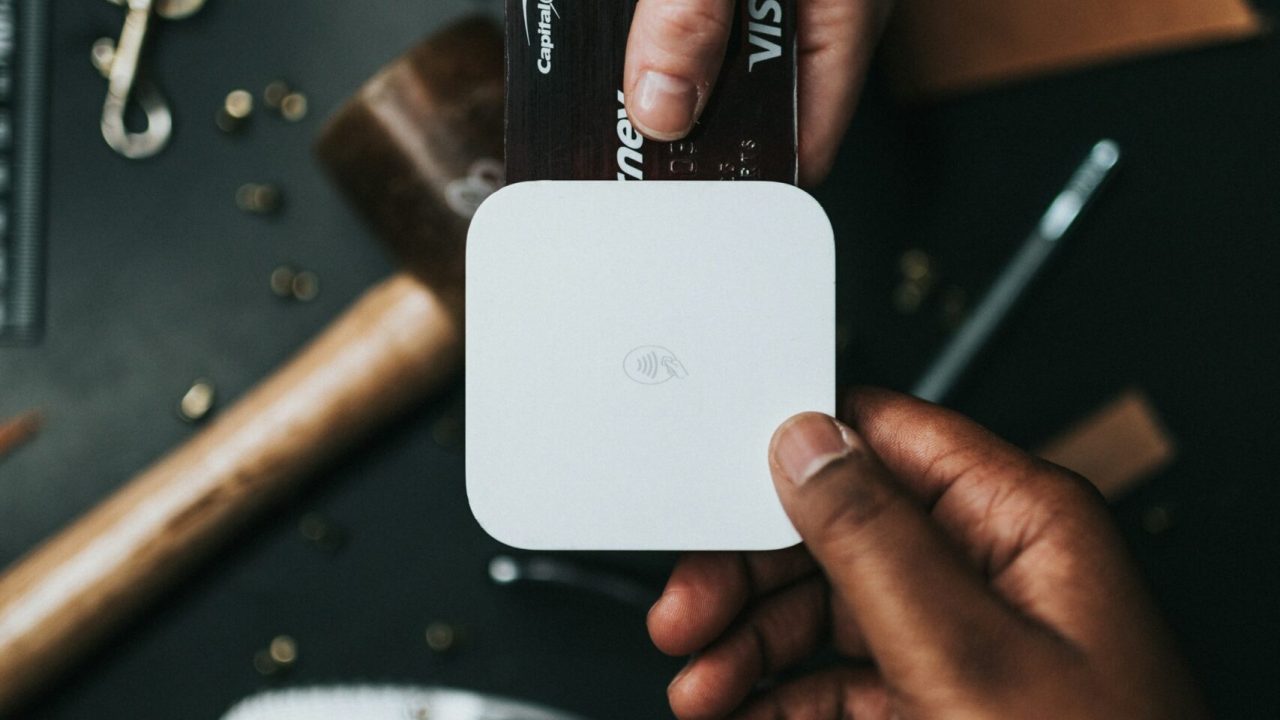

Dual pricing is the cleanest way for a US merchant to recover credit card processing costs in 2026. It is legal in all 50 states, requires no card network registration, and works for restaurants, retail, automotive, professional services, gas stations, and B2B. This guide explains how dual pricing works, how it differs legally from surcharging and cash discount, how to implement it step by step, how it performs by vertical, and what the real ROI looks like for SMBs.
What is dual pricing?
Dual pricing is the single most misunderstood pricing technique in US merchant services. Most business owners hear “dual pricing” and assume it is surcharging with a friendlier name. It is not. Surcharging adds a fee to credit card transactions after the price is set. Dual pricing displays two prices from the start (a cash price and a card price) and lets the customer choose which one to pay. The legal, operational, and financial implications of that distinction are large, and they explain why dual pricing is currently the fastest growing card acceptance strategy among US small and mid-sized merchants.
This guide is for the SMB owner who has heard the term, knows the processing fees are eating margin, and wants a clear answer on what dual pricing actually is, how it works at the register, and whether it holds up in the 50 states. We have implemented this program for over 200 merchants across the Houston metro area, and the mechanics below reflect what works in production, not theory.
Plain-English definition
Dual pricing is a pricing technique that shows two prices for every product or service: a cash price and a card price. The cash price is the lower price. The card price is the higher price, and the difference reflects the merchant’s cost of accepting card payments (typically 2.5 to 3.5 percent of the transaction).
When the customer pays, the point of sale system detects the payment method. If the customer pays with cash, paper check, or a Durbin-regulated debit card, they pay the cash price. If the customer pays with a credit card, they pay the card price. The receipt shows the actual price paid, with no separate “surcharge” line item.
Three points define dual pricing and separate it from anything else:
- Both prices are displayed BEFORE the customer commits to a payment method.
- The customer chooses which price applies by choosing how to pay.
- No fee is added at the register after the fact. The price is what was advertised.
This is legal in all 50 states. Surcharging is not. That is the core differentiator and the reason most of our Katy and Houston merchants migrated from surcharge programs to dual pricing in 2024 and 2025.
How dual pricing works mechanically
The mechanics are simpler than most merchants expect.
Step 1: Calculate true cost
The merchant reviews the last 12 months of statements and calculates the effective rate of card acceptance. For most US SMBs this falls between 2.5 and 3.5 percent of card volume, blended across credit and debit. That figure becomes the spread between cash price and card price.
Step 2: Set both prices
Every menu item, shelf tag, service quote, and online product gets two prices. The cash price is the existing advertised price (or a slightly adjusted version). The card price is the cash price plus the spread, rounded to a sensible figure.
Step 3: POS routes the price automatically
The terminal or POS software detects the payment method at the moment of payment. Cash, check, and debit route to the cash price. Credit cards route to the card price. The cashier does not have to remember anything. The math is invisible to staff.
Step 4: Receipt shows the actual price paid
There is no surcharge line, no added fee, no asterisk. The receipt reads exactly like a normal receipt because, legally, that is exactly what it is.
Step 5: Federal Durbin compliance
The Durbin Amendment (15 USC 1693o-2) requires that regulated debit cards be treated as cash equivalents. They cannot be charged the higher card price. A compliant dual pricing POS handles this automatically by checking the BIN range.
Why dual pricing is structured this way legally
The structure exists because of a specific legal distinction the Supreme Court drew in 2017. Dual pricing is treated as a price display, not as a fee added after the sale. That changes the entire regulatory picture.
Card network rules (Visa, Mastercard, Discover, American Express) treat dual pricing and surcharging as different programs:
-
Surcharging requires registration with Visa and Mastercard, a 30-day advance notice to the acquirer, signage at the entrance and at the register, and a surcharge line item on every receipt. It is also banned outright in several states (Connecticut, Massachusetts, and historically others, with California adding restrictions in 2024).
-
Dual pricing requires no registration with Visa or Mastercard, no advance notice to the acquirer, and no surcharge line on receipts. The signage requirement is lighter because the prices themselves are the disclosure.
Visa’s “single price” rules (which prohibit charging cardholders more than other customers) do not apply to dual pricing when both prices are advertised with equal prominence. That equal prominence requirement is the hinge. If the cash price is in 24-point font and the card price is buried in 8-point footnote text, you are not running dual pricing, you are running a surcharge program that violates network rules.
History
The legal foundation traces back further than most merchants realize.
- 1981, Cash Discount Act. Federal law explicitly permitted merchants to offer a discount for cash. The provision sunsetted in 1984, leaving the area to state law and network rules.
- 1984 to 2013. Most US merchants could not legally surcharge credit cards under network rules and many state laws. Cash discounts existed but were rarely implemented well.
- 2013, settlement. Visa and Mastercard settled an antitrust case that opened the door to surcharging in most states, with conditions.
- 2017, Expressions Hair Design v. Schneiderman, 137 S. Ct. 1144. The Supreme Court held that a New York statute restricting how merchants describe surcharges versus discounts regulated commercial speech, not conduct. The decision opened legal space for merchants to display two prices and let customers see the difference. This is the foundation of modern dual pricing.
- July 1, 2024, California SB 478. California banned hidden mandatory fees, which functionally banned surcharging in the state. Dual pricing remained legal because both prices are displayed before payment. SB 478 became the inflection point: thousands of California merchants migrated from surcharging to dual pricing in Q3 and Q4 2024, and the trend extended nationally.
Where dual pricing fits in the broader pricing taxonomy
Four pricing techniques are often confused. They are not the same.
| Technique | What it does | Where it is legal | Network registration |
|---|---|---|---|
| Surcharging | Adds a percentage to credit card transactions after the price is set | Most states, banned in CT, MA, and restricted in CA | Required with Visa and Mastercard |
| Cash discount | Offers a discount off the advertised (card) price when customer pays cash | All 50 states | Not required, but POS setup must be precise |
| Dual pricing | Displays two prices upfront, customer chooses by payment method | All 50 states | Not required |
| Convenience fee | Charges a fee for using a non-primary payment channel (e.g., online when the primary channel is in-person) | Narrow, channel-specific | Required for some networks |
The reason dual pricing dominates the current SMB conversation is that it is the only option in this list that is legal everywhere, requires no registration, and is transparent to the customer at the moment of decision.
What makes a dual pricing program compliant
A program is only compliant if it gets the following right:
- Both prices are clearly visible at the point of decision (menu, shelf tag, online product page, service quote).
- The cash price is genuinely the lower price. You cannot inflate a fictional “card price” to make a fake discount.
- The POS handles routing automatically based on payment method, including Durbin debit detection.
- The receipt shows the actual price paid, with no surcharge line item.
- Staff are trained to explain both prices when asked, in plain language.
- Signage at the entrance discloses that the business uses dual pricing.
- Online checkout discloses the two prices before the customer selects a payment method, not after.
Miss any of these and the program drifts into surcharge territory, which carries different legal exposure and different network requirements.
Typical savings for a US SMB
The financial case is what drives adoption. The numbers below reflect what we see in practice with Houston metro merchants.
A merchant processing 50,000 dollars per month in card volume at a 2.9 percent effective rate pays roughly 1,450 dollars per month in processing fees, or 17,400 dollars per year. After implementing dual pricing, the merchant typically recovers between 1,100 and 1,300 dollars per month. Cash customers pay the lower price (which is roughly what the merchant was netting before, after fees). Credit card customers pay the higher price, which covers the cost of their own card acceptance.
Annualized:
- Small merchant (50,000 dollars per month card volume): 13,000 to 17,000 dollars recovered per year.
- Mid-sized merchant (100,000 dollars per month card volume): 22,000 to 30,000 dollars recovered per year.
- Larger SMB (1 million dollars or more annual card volume): 25,000 to 35,000 dollars recovered per year.
The recovery is never 100 percent of the fee load, because debit transactions (under Durbin) continue to be charged at the cash price, and a portion of the cost remains on the merchant. But on a 50,000 dollar per month operation, recovering 75 to 90 percent of card acceptance cost is the realistic, sustained outcome.
That is what dual pricing is, mechanically, legally, and financially. The rest of this pillar walks through how to choose a processor that supports it correctly, how to handle the customer conversation, what the POS must do under the hood, and how the program looks state by state when the details matter.
Dual pricing vs surcharging vs cash discount: the legal differences
Why this comparison matters
Three programs sit on the same merchant services menu. Surcharging, cash discount, and dual pricing all aim at the same economic target, which is recovering the 2 to 4 percent that card acceptance eats out of every transaction. The recovery math ends up roughly equivalent across the three. The legal exposure does not.
Choose the wrong approach in the wrong state and the bill arrives in three forms. State attorneys general issue fines. Visa and Mastercard hit the merchant ID with non-compliance assessments and, in repeat cases, terminate the account. Plaintiffs’ attorneys file class actions, particularly in California and New York where consumer protection statutes give them statutory damages and attorneys’ fees without proof of individual harm.
The point of this comparison is not that one program is universally correct. It is that each program has a defensible use case, a paperwork burden, and a specific legal posture. Picking the right one starts with understanding what each program actually is under the law, not what the salesperson called it on the proposal.
Surcharging
A surcharge adds a fee to credit card transactions at the point of sale. The advertised price stays the same. Card payers pay more. The mechanic is simple. The compliance load is not.
Surcharging is currently permitted in roughly 40 states. It is banned outright in California, Massachusetts, Maine, and Connecticut (Connecticut tightened its enforcement posture post 2024). Colorado caps surcharges at 2 percent. New York caps at the actual cost of acceptance and requires the dual price be visibly displayed under GBL 518 as amended in February 2024.
Network registration is mandatory. Visa and Mastercard both require the merchant to notify the card brands at least 30 days before the first surcharged transaction. The cap is the lesser of 3 percent (Visa) or the merchant’s actual cost of acceptance. Disclosure is required at the point of entry, at the point of sale, and on the receipt as a separate line item.
Penalties scale fast. State fines range from $500 to $25,000 per violation depending on the statute. Network non-compliance fees start in the hundreds per occurrence and escalate to MID termination. A surcharge program structured without registration, without the 3 percent cap, without receipt itemization, or run in a banned state is a stack of preventable liabilities.
Surcharging works when the average ticket is high, the customer base is sophisticated (B2B, corporate cards), and the merchant has the bandwidth to maintain registrations across the states where it operates.
Cash discount program
A cash discount program inverts the surcharge. The advertised price reflects the card price. Cash payers get a discount applied at the register. Same economics, different legal frame.
Cash discount is legal in all 50 states. It does not trigger any state surcharge prohibition because it is a discount off list price, which is squarely within longstanding consumer protection doctrine. No network registration is required. No state-specific cap applies.
The implementation looks like this. The shelf price, menu price, or invoice reads the card price. At the register, if the customer pays cash, the POS applies a percentage discount. The receipt shows the discount as a separate line item. The price the cash customer pays is lower than the advertised price.
Disclosure still matters. California SB 478 (effective July 2024) requires that any mandatory fee or pricing structure be disclosed up front, which has reshaped how cash discount programs are presented in California. Some providers have failed this test by burying the structure.
The biggest legal risk in cash discount is misclassification. A surcharge dressed up as a cash discount is still a surcharge. If the merchant advertises a price and then adds a fee for card use, that is a surcharge regardless of what the marketing material calls it. New York and California have both pursued merchants who used “cash discount” labels for what were functionally surcharges. The test is whether the advertised price is the card price (cash discount, legal) or the cash price (surcharge, regulated).
Cash discount fits low-ticket retail and services where the customer base genuinely includes cash payers and where the pricing display can be set at card price without scaring off foot traffic.
Dual pricing
Dual pricing displays both the card price and the cash price together, before the customer chooses how to pay. The customer sees both numbers. The POS routes the transaction to the right price based on tender type. There is no fee added, no discount calculated at the register, just two prices shown side by side.
Dual pricing is legal in all 50 states. It does not require network registration with Visa or Mastercard because it is a pricing display practice, not a surcharge. No state-specific cap applies because there is no surcharge to cap. Disclosure is built into the model. The customer sees both prices before paying.
The trade-off is implementation cost. Dual pricing requires that both prices be visible everywhere a price is shown. Menus get reprinted with two columns. Shelf tags get two numbers. Ecommerce checkouts have to display both options. Invoices need both lines. For a single-location retailer, this is a one-time lift. For a 40-unit franchise, it is a project.
Once the display is in place, the program runs itself. There is no monthly registration to renew, no state cap to recalculate when New York changes its acceptance cost methodology, no receipt itemization to police. The compliance documentation file is thin.
The customer perception data is the cleanest of the three. Surcharges read as penalties. Cash discounts can read as gimmicks. Two prices side by side read as transparency. The dispute rate and the friendly fraud rate both run lower on dual pricing accounts in the data merchants share with their processors.
Side-by-side detailed comparison
| Factor | Surcharging | Cash Discount | Dual Pricing |
|---|---|---|---|
| Legal in all 50 states | No (banned in 4) | Yes | Yes |
| Network registration required | Yes (30 days) | No | No |
| State caps apply | Yes (varies) | No | No |
| POS implementation complexity | Medium | Medium | High (menu/shelf reprinting) |
| Customer perception | Negative typically | Positive (discount framing) | Neutral to positive |
| Receipt itemization | Surcharge line item required | Discount as line item | No separate line (actual price) |
| Compliance documentation | Heavy | Moderate | Light |
| Typical merchant recovery | 1.5 to 3 percent | Equivalent | Equivalent |
| Risk of misclassification | High | Medium | Low |
| Best for | High-ticket B2B | Low-ticket retail/services | Menu-pricing businesses |
Legal misclassification risks (the biggest pitfall)
The single most common compliance failure is not running the wrong program. It is running the right program under the wrong label.
Calling a surcharge a cash discount because it sounds friendlier is the textbook violation. New York and California regulators have both pursued merchants on exactly this theory. If the advertised price is the cash price, and card users pay more than the advertised price, that is a surcharge no matter what the sticker on the door says.
Calling a fee a “convenience fee” when it is actually a surcharge is the second trap. Mastercard’s Operating Regulations explicitly prohibit using “convenience fee” branding for surcharges on standard card-present or card-not-present transactions. A true convenience fee applies only to an alternative payment channel that is genuinely a convenience over the standard channel, and it has narrow rules around it. The label is not interchangeable with surcharge.
Treating dual pricing as surcharging in the compliance file is a less dangerous mistake but a costly one. A merchant who registers with Visa and Mastercard for a program that is actually dual pricing has signed up for cap policing, receipt requirements, and disclosure obligations that the program does not legally require. The fix is structural, not paperwork.
Inflating the card price so the cash discount looks bigger than the actual cost of acceptance is illegal under New York GBL 518 and creates exposure under California SB 478. The discount must reflect the merchant’s real acceptance cost or fall under the safe harbor cap, not an arbitrary number that maximizes recovery.
State-specific guidance
California (post SB 478, effective July 2024): Dual pricing is permitted if both prices are clearly displayed before the customer selects payment method. Surcharging is banned. Cash discount programs are permitted with strict up-front disclosure, and the regulators have read the disclosure requirement aggressively.
New York (GBL Section 518, amended February 2024): Dual pricing is permitted if both prices are clearly displayed. Surcharging is permitted but capped at the actual cost of acceptance, and the cap must be substantiated. Cash discount is permitted with disclosure. The 2024 amendment specifically tightened the display requirement.
Texas (post Rowell v. Paxton, 5th Circuit 2018): All three programs are legal. Surcharging requires network registration and adherence to Visa and Mastercard caps. The state has no additional cap layered on top.
Massachusetts: Dual pricing is permitted. Surcharging is banned under state law. Cash discount is permitted.
For multi-state operators, the practical rule is to pick the program that is defensible in the strictest state in the footprint and run it everywhere. Trying to run surcharging in Texas and dual pricing in California inside the same brand creates training and audit headaches that swamp the recovery delta.
Why ProTech recommends dual pricing as default
The recommendation is not aesthetic. It is operational.
Dual pricing carries the cleanest legal posture across all 50 states, which matters for any merchant that operates in more than one state today or might in the next 24 months. There is no network registration to maintain and no state cap to recalculate when a regulator changes the methodology. Customer transparency reduces chargeback friction and the friendly fraud rate, which shows up in the loss column even when it does not show up in the savings column. Multi-state scaling is straightforward because the program does not change shape state by state. Compliance cost over time, measured in hours of operator and bookkeeper attention, runs lower than either alternative.
The trade-off is the one-time implementation lift on menus, shelf tags, and digital storefronts. For most businesses that lift is small relative to the multi-year compliance carrying cost of surcharging.
Cases where surcharging or cash discount makes more sense
Dual pricing as default does not mean dual pricing always.
Surcharging fits B2B operators with high average tickets ($500 and up) and customers who carry corporate cards and understand cost of acceptance. The recovery math is more visible to the buyer, the dispute risk is structural rather than perception-driven, and the registration burden is amortized over fewer, larger transactions.
Cash discount fits high-volume cash businesses such as gas stations, convenience stores, laundromats, and certain hospitality operations where the customer base genuinely prefers cash and the discount framing pulls foot traffic. The card price as the advertised price reads as standard pricing to a cash-leaning customer base.
Dual pricing fits restaurants, retail with menu or price-tag display, professional services with published rates, and ecommerce. Anywhere the price is displayed before the customer commits, the dual price model fits naturally.
When to use a hybrid approach
Multi-state operators sometimes run dual pricing as the base program and layer state-specific surcharging only in states where the average ticket and customer profile justify the registration burden. The base posture stays clean in every state. The surcharge runs where the math earns it.
High-volume businesses with both an in-store and an online channel often run dual pricing in-store, where the menu can carry both prices, and surcharging online, where the checkout flow can display the surcharge as a separate line item. The split matches the customer experience to the legal frame.
Professional services with both invoiced clients and storefront foot traffic sometimes run cash discount on invoices, where the cash incentive lands clearly, and dual pricing on storefront, where the two prices sit on the counter sign. Same recovery target, two delivery mechanisms tuned to two customer flows.
In every hybrid configuration the rule holds. The label on the program has to match the legal structure of the program. The compliance file has to match what the customer sees at the point of sale.
References: California SB 478 (effective July 2024), New York GBL Section 518 (amended February 2024), Expressions Hair Design v. Schneiderman, 137 S. Ct. 1144 (2017), Visa Core Rules (surcharge cap and registration), Mastercard Operating Regulations (convenience fee restrictions).
How to implement dual pricing (compliant in 2026)
You decided dual pricing is right for your business. Now you need to roll it out without tripping a state attorney general investigation, a card brand chargeback, or a customer revolt at the counter. This section is the operational manual. Seven steps, real numbers, exact signage copy, and the mistakes that get merchants fined.
Step 1: Calculate your true cost of acceptance
Dual pricing only works (legally and ethically) when the card price reflects what credit card acceptance actually costs you. Inflating the markup turns a legal dual price into an illegal surcharge under New York General Business Law 518 and triggers compliance issues with Visa Core Rules.
Pull your last three months of merchant statements. Not one month, three. Card mix varies week to week, and a single month can be skewed by a high-volume Amex week or a chargeback adjustment. Add up every fee on those statements: interchange, assessments, processor markup, monthly fees, batch fees, PCI fees, statement fees, gateway fees. Everything. Divide that total by your total card volume for the same period. The result is your effective rate.
A typical small to medium business in retail, restaurants, or services lands between 2.5 and 3.5 percent. Convenience stores and high-ticket B2B can be lower (1.8 to 2.4 percent). Specialty retail with heavy Amex usage can run 3.5 to 4 percent.
Your card price markup is your effective rate. Not more. If your effective rate is 3.1 percent, your card markup is 3.1 percent. Rounding up to 3.5 percent or 4 percent because “it makes the math easier” is exactly what regulators look for when they prove a dual price is actually an illegal hidden surcharge.
Your cash price is your current shelf or menu price. You are not raising prices, you are exposing the true cost of card acceptance and offering a discount for cash, check, or debit.
Document the calculation. Save the three statements (PDF), the spreadsheet showing the math, and the date you set the markup. This is your audit trail if a regulator, card brand, or customer challenges you later.
Step 2: Configure your POS for dual pricing
Modern POS platforms have native dual pricing programs. Clover, Square, Toast, Lightspeed, Aldelo, SpotOn, Revel, and most major systems support it as a built-in feature, not a workaround.
Configure your cash price as the base price in the POS. This matters for reporting, taxes, and refunds. The base price is the cash price.
Configure the card price as the base plus the markup percentage you calculated in Step 1. The POS applies the markup automatically when a credit card is detected.
The POS auto-detects payment method at the card swipe, tap, or insert. Credit card triggers the card price. Cash, check, debit card, and PIN debit trigger the cash price.
Test with sample transactions before you go live. Run a credit transaction, a debit transaction, a cash sale, and a mobile wallet payment (Apple Pay and Google Pay backed by credit and by debit). Verify each one applies the correct price.
Critical: verify debit cards always default to the cash price. Charging the card price on a debit card transaction violates the Durbin Amendment and creates instant exposure. If your POS does not distinguish debit from credit on Visa and Mastercard branded debit, you need a different POS or a different configuration.
Step 3: Update your menu, shelves, or online catalog
Both prices must be visible at the point of decision. This is the single rule that separates legal dual pricing from illegal surcharging in most state laws.
Menu: list the cash price prominently. Right next to it, list the card price clearly labeled. Do not bury the card price in a footer or a separate menu insert. Both prices appear on the same line or in adjacent columns.
Shelf tags: same standard. Two prices, clearly distinguishable, both visible to the customer before they reach the register. Tags can use color coding (green for cash, blue for card) or simple labels.
Online catalog: card price and cash price both shown before payment selection. Product detail pages, cart, and checkout. Not after the customer enters their card. Before.
Mobile menus and mobile site: same rule. A QR code menu that shows only one price and reveals the other only at checkout is a CA SB 478 violation in California and an arguable surcharge in other states.
Common formats that work:
– “$10.00 cash / $10.30 card”
– Two columns labeled “Cash Price” and “Card Price”
– A single price with a clear note: “Card price: $10.30. Save 3% with cash, check, or debit.”
Avoid: “Price: $10.30. Discount available.” That hides the cash price and is the exact pattern California SB 478 was written to stop.
Step 4: Install required signage
Disclosure signage is not optional. It is required at the entrance, at the point of sale, and online.
Entrance signage: a sign at every customer entrance disclosing the dual pricing policy. Customers should know before they pick up a product or sit at a table that two prices apply.
POS area signage: a second sign at every checkout terminal repeating the policy. This is the last moment before payment.
Online disclosure: a prominent banner or notice on product pages and at the top of checkout.
State requirements vary. California SB 478 is the strictest: the cash price must be the most prominent price displayed, and any discount or surcharge language must be in equal or greater prominence to the price itself. New York requires the total credit card price be displayed in dollars and cents (not just a percentage) wherever prices appear.
Exact signage template that satisfies most state requirements:
“All prices shown reflect a [X%] discount when paying with cash, check, or debit. The card price shown is what you pay when using a credit card. Debit cards always receive the cash price.”
Replace [X%] with your actual markup. Print the sign at minimum 24-point font for entrance and POS placement. For California operations, verify your sign meets SB 478 prominence requirements (the cash price must be the most prominently displayed price).
Step 5: Train your staff
Staff training is where most implementations fail. The POS is configured correctly, the signage is up, and then a cashier says “we charge a fee for credit cards” and you are accidentally surcharging in the customer’s perception. That is the source of most negative reviews tied to dual pricing.
Train your team to understand the model: it is not a fee, it is two prices. The customer chooses which price applies by choosing how to pay.
Prepare answers to the three or four questions you will hear every day. Print them on a card near the register if needed.
Train staff to handle objections calmly. The customer is not wrong to ask. Your job is to explain clearly, not defensively.
Staff should never add the markup manually. The POS handles it. If a cashier is typing in a surcharge by hand, you have a different problem (likely an illegal surcharge), and the configuration needs fixing.
Refund handling: train staff to refund the exact price paid. If the customer paid the card price, the refund is the card price. If the customer paid the cash price, the refund is the cash price. Same amount, same payment method whenever possible.
Step 6: Update online checkout
E-commerce dual pricing has the same disclosure rules as in-person, plus a few unique requirements.
Display both prices on every product page. The cash price and the card price, both visible, both labeled.
Display both prices in the cart. Subtotal, taxes, and total should each show both options or recalculate dynamically once the customer selects a payment method.
Display both prices at payment method selection. This is the actual moment of decision. The customer picks credit card or debit card, and the total updates clearly.
Disclosure copy on checkout: a sentence or short paragraph explaining the policy, in the same prominence as the price.
Receipts (digital and printed) show the actual price paid. No “surcharge” line. The line item shows the card price (if credit) or the cash price (if debit, cash, or check). One price, the one the customer agreed to.
Step 7: Compliance documentation
Keep a folder (physical or digital) with every artifact a regulator or card brand might request:
- Monthly merchant statements archived as PDFs
- The effective rate calculation worksheet showing how you set the markup
- Photos of entrance and POS signage at every location
- POS configuration export or screenshots showing dual pricing setup
- Staff training acknowledgement form signed by each employee
- Screenshots of online disclosure on product pages and checkout
- Sample receipts (credit, debit, cash)
If a state attorney general, a card brand, or a class action plaintiff comes asking, you produce the folder. Without it, you are arguing from memory against documented complaints.
Common implementation mistakes (avoid these)
- Inflating the card price beyond your actual cost of acceptance. Illegal in New York under GBL 518, and grounds for a card brand violation in every state.
- Hiding the cash price in fine print. California SB 478 violation. The cash price must be the most prominent price.
- Showing only the card price online and revealing the cash price after the customer enters payment info. SB 478 violation, and a class action magnet.
- Charging debit cards the card price. Durbin Amendment violation, exposes you to immediate processor action.
- Not training staff. Customer confusion at the counter generates bad reviews and complaints to state regulators.
- No signage at the entrance. Most state laws require it. Absence of signage is the first thing a complaint investigator notices.
- Treating dual pricing as surcharging in receipts. If the receipt shows a “surcharge” line, you are surcharging legally even if you call it dual pricing. The receipt format must show one price.
- Forgetting refund handling. Customer paid $10.30 with a credit card. Refund must be $10.30. Refunding $10.00 because that is the “base price” creates a complaint and a chargeback.
- Multi-location inconsistency. Some stores doing dual pricing, some not. Confuses regular customers and creates a documentation nightmare.
- Not updating the online catalog. E-commerce often gets forgotten. In-person dual pricing with hidden online card markup is a clear regulatory target.
Customer disclosure scripts
Script 1: customer asks “why are there two prices?”
“We show both the cash price and the card price upfront. Cash, check, or debit payment gets you the lower price. Credit card payment is slightly higher because card networks charge us a fee to process that payment. This way you choose what works for you.”
Script 2: customer objects “this is a surcharge in disguise.”
“It is not a surcharge. We display both prices upfront so you can choose. A surcharge is a fee added after the price. Here, both prices are shown before you pay. You are seeing the real cost of each payment method.”
Script 3: customer asks “can you remove the card pricing for me?”
“I cannot change the card price for an individual customer. The card price is the same for all customers using a credit card. If you would prefer the cash price, you can pay with cash, check, or debit card.”
These three scripts cover roughly 90 percent of in-store questions. Print them on a laminated card and keep one at every POS terminal.
Receipt format
Receipts show the actual price paid. No surcharge line, no fee line, no “credit card adjustment” line. The line item shows either the cash price or the card price, and that is the total.
Example credit card transaction receipt:
– Item: $10.30 (card price)
– Tax: $0.85
– Total: $11.15
– Paid: Credit Card
Example debit card or cash transaction receipt:
– Item: $10.00 (cash price)
– Tax: $0.83
– Total: $10.83
– Paid: Debit Card
If your current POS receipt template adds a separate surcharge line, change the template. A receipt with a surcharge line is documentary evidence of surcharging, regardless of how you label the program internally.
Refund and return handling
Refund the actual price paid. If the customer paid the cash price, refund the cash price. If the customer paid the card price, refund the card price. The same amount the customer paid.
Maintain consistency in refund records. Your refund total should equal the original transaction total. Mismatched refunds (refunding a different amount than paid) generate chargebacks and accounting headaches.
If the customer changes payment method on the refund (paid in cash, wants the refund on a credit card), apply the card price logic to the refund. They are now using a credit card, so the card price applies. Document the change.
Document the return reason. Standard practice for any retail operation, but especially relevant when prices vary by payment method.
Multi-location considerations
Centralize POS configuration if possible. A single dual pricing setup pushed to every terminal at every location prevents drift, where one store gradually develops different markups or different signage.
Sync menu and shelf updates across locations. New product launches, price changes, and seasonal items all need both prices everywhere, at the same time.
Same signage at every location. Same wording, same placement, same prominence. Inconsistent signage across a multi-location operation invites regulator attention.
Single compliance archive covering all locations. One folder, organized by location, with all the documentation in Step 7.
Quarterly compliance review checklist
Block 30 minutes every quarter to verify dual pricing is still set up correctly.
- Verify cost of acceptance still matches the markup (interchange rates and processor fees change, your markup should change with them)
- Update signage if percentages change
- Verify online catalog still shows both prices on every product (new SKUs sometimes inherit only one price)
- Train new staff hired since the last review
- Document any state law changes affecting your operations (subscribe to a payments-law newsletter or work with a processor that tracks this)
When to call ProTech
Dual pricing is straightforward when your operation is single-location, single-state, and low volume. It gets complicated fast when any of these apply:
- New to dual pricing and unsure how to start
- Multi-state operations with varying state laws (CA, NY, CT, MA, ME each have specific rules)
- High-volume operations where a small markup error costs thousands per month
- POS integration questions, especially for legacy systems or custom-built e-commerce platforms
- Compliance audit preparation, whether triggered by a regulator, a card brand, or internal due diligence
ProTech offers a 30-day on-site implementation timeline for Katy, Houston metro, and national clients. Effective rate calculation, POS configuration, signage design, staff training, online checkout updates, and a complete compliance archive delivered in 30 days. After that, quarterly reviews keep you current as state laws and interchange rates change.
Citations and source authority: California SB 478 (effective July 1, 2024), New York General Business Law 518 (clarified February 2024), Visa Core Rules and Visa Product and Service Rules, Mastercard Operating Regulations, the Durbin Amendment to the Dodd-Frank Act (debit card surcharge prohibition).
Dual pricing by vertical: what works in your industry
Dual pricing is not a one-size-fits-all program. The same model that delivers 3% recovery for a gas station in Cypress can struggle in a high-end Memorial-area boutique where customers expect round prices and frictionless checkout. After 200+ Houston metro implementations since 2018, ProTech Payments has clear data on which verticals win with dual pricing, which need modified approaches, and which should skip it entirely in favor of surcharging or straight cash discount programs.
This section breaks down eight verticals with operational detail, customer acceptance patterns, Houston-specific adoption rates, and the common pitfalls that kill ROI in each industry.
Restaurants and food service
Restaurants present the highest perception risk and the highest operational complexity, but a well-executed dual pricing program still works.
Menu redesign: The cash price must be displayed prominently with the card price clearly labeled. Two common formats dominate: dual price on every menu item (burger $11.50 cash / $12.00 card) or a header note declaring “all prices reflect 4% cash discount, card prices are 4% higher.” Texas Restaurant Association data from 2025 shows the header format is preferred 3 to 1 by operators because reprints stay simpler.
POS configuration: Clover Restaurants, Toast, and Lightspeed all support dual pricing natively. Toast requires a specific menu modifier setup, Clover handles it at the item level, Lightspeed uses a price tier toggle. ProTech configures all three during onboarding.
Tipping considerations: Tip is calculated on the actual price paid (cash price if paying cash, card price if paying card). This must be set explicitly on the POS to avoid tipping on the higher base.
Delivery orders: DoorDash, Uber Eats, and Grubhub do not allow merchants to display two prices. Most ProTech restaurant clients absorb the card price into their delivery menu and only run dual pricing on dine-in and pickup. Direct online ordering (Toast Online, ChowNow) can display both prices.
Customer perception: Surprisingly positive when displayed upfront. The friction appears when customers are surprised at the register. Pre-pandemic adoption was rare. Post-2022 inflation, customers expect to see “cash price” callouts.
Common pitfalls: Inconsistent menus between dine-in and online, forgetting to update third-party menu boards, servers not trained to mention the cash option.
Houston restaurant adoption: Approximately 22% according to local processor surveys conducted across the metro in Q1 2026.
Best for: Full-service, fast-casual, ethnic cuisine (especially Tex-Mex and Vietnamese where cash is already common), family restaurants, taquerias, hookah lounges.
Retail (boutique, specialty, hardware)
Retail is the most operationally clean vertical for dual pricing.
Shelf tags: Dual price printed on every tag. Modern POS systems (Square, Lightspeed Retail, Heartland Retail) auto-generate dual price tags.
High-ticket items: Dual pricing has more impact at higher price points. The card vs cash difference on a $500 hardware purchase is $15. On a $1,200 power tool, it is $36. Customers do the math and pay cash on big-ticket purchases roughly 35% of the time, vs under 10% on items below $50.
Inventory management: POS handles it automatically. No manual price toggling.
Customer perception: Similar to gas pump pricing, well-understood. Hardware store customers in particular treat it as normal.
Common verticals: Hardware stores, boutiques, electronics, sporting goods, gun shops, motorcycle parts, jewelry, furniture.
Online integration: E-commerce should show both prices or default to card price with a “save X% with cash” callout at checkout. Shopify and BigCommerce both support custom price displays.
Pitfalls: Forgetting to apply dual pricing to markdown items and sale prices. The percentage must apply to the discounted price, not the original.
Houston retail adoption: Approximately 28%.
Typical ROI: 2 to 3 percent recovery.
Gas stations and convenience stores
The original dual pricing vertical, with cash vs credit pump pricing dating to the 1980s.
Customer perception: Extremely high acceptance. This is the only vertical where customers actively expect dual pricing.
Pump pricing displays: Two prices side by side, typically with cash in larger numerals. Texas does not regulate the format beyond requiring both prices to be visible from the street if either is advertised.
Inside store: Shelf tags should match the pump approach. Inconsistency between pump pricing and inside store pricing is the single most common pitfall ProTech encounters in this vertical.
Legal nuance: Fuel pricing has state-specific regulations that are separate from card surcharge rules. Texas allows it without restriction. Some states (Oklahoma until 2024, parts of New York) historically restricted fuel pump dual pricing display formats but not the underlying program.
ROI: Highest of any vertical. Gas stations run on thin margins and high transaction volume, so even 2.5 to 3.5% recovery on card transactions compounds dramatically. A typical Houston-area gas station processing $250,000 monthly in card volume recovers $75,000 to $105,000 annually.
Common pitfalls: Inside store pricing inconsistent with pump pricing, forgetting to apply dual pricing to lottery and tobacco (which often have their own rules).
Houston adoption: Approximately 95%. Near-universal.
Automotive (repair shops, dealers, parts retailers)
Automotive is ProTech’s strongest-performing vertical by adoption rate.
Estimate-to-invoice workflow: The estimate shows both prices. Customer chooses payment method when approving the work. Final invoice reflects the chosen price.
Parts retail: Standard retail dual pricing on shelf tags.
Auto repair specific: Labor plus parts plus tax, with dual pricing applied to the total. Shop management systems (Mitchell 1, ShopWare, Tekmetric) all support dual pricing line items.
Houston auto repair adoption: Approximately 30%, the highest of any Houston vertical for non-fuel businesses. Independent shops in particular have embraced it because their margins are squeezed.
ROI: 2.5 to 3 percent recovery typical.
Best for: Independent repair shops, dealerships (especially used car lots), tire stores, transmission shops, body shops.
Pitfalls: Forgetting that warranty work and insurance claims do not qualify for dual pricing (the insurer or warranty company is paying, not the consumer).
Medical practices and healthcare
Medical is operationally complex but works well when scoped correctly.
Patient billing: Dual pricing on services that the patient pays directly, not on insurance-billed services.
HIPAA considerations: Payment data must remain segregated from patient health information. ProTech ensures the merchant’s POS or payment terminal does not store PHI alongside card data.
Vertical sub-adoption: Dental, chiropractic, optometry, dermatology, and concierge medicine have the highest adoption. Primary care and hospital-based practices have the lowest.
Telehealth: Dual pricing applies to remote services. Telehealth platforms (Doxy, SimplePractice, Spruce) support it through their integrated payment partners.
Insurance complications: Dual pricing applies only to the patient responsibility portion (copay, deductible, coinsurance, self-pay). Insurance reimbursement is not affected.
Common pitfalls: Forgetting to apply dual pricing correctly to insurance copay billing, applying it to services the insurer is paying for (which is a contractual violation with most payers).
Houston medical adoption: Approximately 18%.
Typical ROI: 2 to 2.8 percent recovery.
Professional services (legal, accounting, consulting)
Professional services is the cleanest implementation vertical of all eight.
Service invoices: Dual pricing displayed on retainers, hourly billing, flat-fee work, and consultations.
High-ticket transactions: A $5,000 retainer at 3% card surcharge represents a $150 difference. Clients paying card vs cash split roughly 60/40 on retainers above $2,500.
Recurring clients: Clear policy in engagement letters. The dual pricing policy should be disclosed at intake and reiterated on every invoice.
Trust accounts (IOLTA): Specific rules apply. Texas State Bar guidance from 2024 confirms that surcharges and dual pricing on IOLTA-funded transactions require disclosure but are permitted. Consult with the bar association before implementing on trust account transactions.
Pitfalls: Forgetting recurring monthly retainers (the dual pricing policy must apply consistently across one-off and recurring billing).
Houston professional services adoption: Approximately 25%.
Typical ROI: 2 to 2.7 percent recovery.
Beauty and wellness (salons, spas, gyms)
Beauty and wellness is the most perception-sensitive vertical after restaurants.
Service pricing: Dual pricing on services and retail products. Booking platforms (Vagaro, Mindbody, Boulevard) support dual pricing.
Tipping: Calculated on the service price the customer chose (cash or card). The POS must be configured correctly to avoid tip-on-base errors.
Membership pricing: Monthly billing with dual pricing option. Some gyms apply dual pricing only to new sign-ups and grandfather existing members.
High retail/service mix: Dual pricing applies to both. Salons with strong retail (shampoo, color products) recover meaningfully on the retail side.
Customer perception: Depends heavily on brand positioning. Mid-market salons and gyms see neutral-to-positive response. High-end spas and luxury wellness brands see friction.
Houston adoption: Approximately 20%.
Typical ROI: 1.8 to 2.5 percent recovery.
B2B services and wholesalers
B2B is operationally simple and has the highest customer acceptance.
Invoice billing: Dual pricing displayed on invoices. QuickBooks, Xero, and FreshBooks all support dual pricing line items or surcharge fields.
Corporate card customers: Typically pay card price without complaint. Corporate buyers are accustomed to seeing surcharges on B2B card transactions.
Net 30 customers: Depends on payment method at settlement. If the customer pays the Net 30 invoice by ACH or check, they get the cash price. If they pay by card, they pay the card price.
Volume discounts: Dual pricing applies to the discounted amount, not the list price.
Common pitfalls: ACH payments treated as cash (correct), wire transfers (depend on processor configuration), checks (always treated as cash equivalent).
Houston B2B adoption: Approximately 15%, but rising fast as more wholesalers learn that their customers tolerate it.
Typical ROI: 2.5 to 3 percent recovery.
Comparative table by vertical
| Vertical | Adoption rate (Houston) | Customer acceptance | Implementation complexity | Typical ROI |
|---|---|---|---|---|
| Restaurants | 22% | Medium-high | High (menu reprint) | 1.5-2.5% |
| Retail | 28% | High | Medium (shelf tags) | 2-3% |
| Gas stations | 95% | Very high | Low (already common) | 2.5-3.5% |
| Automotive | 30% | High | Medium | 2.5-3% |
| Medical | 18% | Medium | High (insurance) | 2-2.8% |
| Professional services | 25% | High | Low (invoices) | 2-2.7% |
| Beauty/wellness | 20% | Medium | Medium | 1.8-2.5% |
| B2B/wholesale | 15% | High (B2B) | Low | 2.5-3% |
What doesn’t work for dual pricing
Not every business should run dual pricing. ProTech actively recommends against it in these scenarios:
- Very low ticket items. Transactions under $5 do not justify the customer friction. The $0.15 recovery on a $5 sale is outweighed by perception cost.
- Tip-heavy verticals where customers expect round numbers. Bars, coffee shops with tip jars, and counter-service venues where the customer is rounding up the tip.
- Subscription services with auto-billing. Use a flat surcharging program or a straight cash discount instead. Auto-bill customers do not see the price decision in real time.
- Marketplaces and aggregators. If your sales flow through DoorDash, Amazon, Etsy, or similar, the customer never sees your merchant pricing.
- High-end luxury. Perception risk outweighs ROI. A Galleria-area luxury boutique will damage brand more than it recovers in fees.
Houston metro adoption snapshot (May 2026)
ProTech Payments has implemented dual pricing for 200+ Houston metro merchants since 2018. The adoption pattern is consistent across the metro from Katy to Pasadena, Sugar Land to The Woodlands.
- Highest adopters: gas stations (95%), auto repair (30%), retail (28%), professional services (25%).
- Mid adopters: restaurants (22%), beauty/wellness (20%), medical (18%).
- Lower adopters: B2B/wholesale (15%, but growing fastest), high-end retail and luxury services.
- Average annual recovery: $15,000 to $35,000 per merchant, with gas stations and high-volume auto repair pushing $50,000 to $100,000.
- Implementation timeline: 30 days from decision to live, including POS configuration, signage, staff training, and customer-facing material updates.
The single biggest predictor of dual pricing success is not vertical. It is whether the merchant trains staff to mention the cash option at the start of the transaction, not the end. Merchants who position the cash discount as a customer benefit (“you can save 4% paying cash today”) see 40% higher cash conversion than merchants who position the card price as a penalty.
Sources
Visa Core Rules (Visa Rules – Core Principles, updated April 2025), NACS (National Association of Convenience Stores) State of the Industry data 2024, Texas Restaurant Association 2025 membership pricing survey, Texas State Bar IOLTA guidance 2024, ProTech Payments internal merchant data (200+ Houston metro implementations 2018-2026).
Dual pricing ROI: what merchants actually recover
Most merchants ask the same first question. How much will I actually recover, after the dust settles, after some cash customers, after staff time, after signage costs. The honest answer depends on your card mix, your average ticket, and your effective rate. But the patterns are remarkably consistent. Below are five real-world scenarios pulled from ProTech Payments implementations across Katy, Houston metro, Sugar Land, and nationally. Numbers are rounded and anonymized but reflect actual merchant outcomes.
Real-world ROI scenarios
Scenario 1: Small Katy restaurant
A neighborhood Katy restaurant, mostly card-paying customers, fast counter service.
- Annual card volume: $400,000
- Effective rate before dual pricing: 2.95 percent, total $11,800 in fees
- After dual pricing implementation: about $10,200 recovered (cash customers pay the lower price, card customers cover roughly 85 percent of their own cost)
- Net annual recovery: $10,200
- Implementation cost: $0 (ProTech includes setup), staff time about 6 hours
- Payback period: immediate
Scenario 2: Houston metro auto repair shop
Higher ticket, mixed payment methods, B2B and B2C blended.
- Annual card volume: $1.2 million
- Effective rate before: 2.7 percent, total $32,400 in fees
- After dual pricing: about $28,000 recovered
- Net annual recovery: $28,000
- Implementation cost: $0
- Payback period: immediate
Scenario 3: Mid-size retail boutique
Apparel, average ticket around $85, mostly credit card customers.
- Annual card volume: $850,000
- Effective rate before: 3.1 percent, total $26,350 in fees
- After dual pricing: about $22,000 recovered
- Net annual recovery: $22,000
- Implementation cost: $0
- Payback period: immediate
Scenario 4: High-volume Houston gas station
Industry where dual pricing has been standard for decades.
- Annual card volume: $4.5 million
- Effective rate before: 2.4 percent, total $108,000 in fees
- After dual pricing (already industry standard for gas): $95,000 or more recovered
- Net annual recovery: $95,000
- Implementation cost: $0
- Payback period: immediate
Scenario 5: Law firm in Sugar Land
Professional services, larger invoices, low transaction count.
- Annual card volume: $600,000
- Effective rate before: 2.85 percent, total $17,100 in fees
- After dual pricing: about $14,500 recovered
- Net annual recovery: $14,500
- Implementation cost: $0
- Payback period: immediate
What affects ROI
Not every business sees the same numbers. Five variables move the needle.
- Card vs cash mix. More cash means less fee exposure to recover. Counterintuitive but true. A merchant with 60 percent cash recovers less in absolute terms than one at 95 percent card, but also has lower friction.
- Average ticket size. Higher tickets concentrate more dollars per transaction, so the recovery per swipe is larger.
- Effective rate. The higher your blended rate before dual pricing, the more upside. Restaurants and boutiques at 3 percent plus benefit the most.
- Customer acceptance. A resistant customer base can drive small churn. In our experience this is under 5 percent and often zero with good signage.
- Implementation quality. Clear signage, trained staff, and consistent communication make the difference between smooth rollout and friction.
Total cost of implementing dual pricing with ProTech
Most merchants overestimate the cost. The actual line items are small.
- ProTech setup fee: $0 (included)
- POS configuration: handled by ProTech
- Signage: ProTech provides templates, merchant prints (about $50 to $200)
- Menu reprinting (restaurants only): merchant’s choice (about $200 to $1,000)
- Staff training time: about 6 hours for a 5-person team
- Total typical cost: $250 to $1,200
Net benefit vs cost
- Average annual recovery: $15,000 to $35,000 per merchant
- Total implementation cost: $250 to $1,200
- Net first-year benefit: $13,000 to $33,000 or more
The math is rarely a close call. Even on the low end, recovery exceeds cost by an order of magnitude in year one. Year two and beyond, the cost is effectively zero and the recovery continues.
Frequently asked questions
Is dual pricing legal in my state?
Yes. Dual pricing is legal in all 50 states because it is a price display, not a surcharge. It is treated differently than surcharging under both state law and card network rules. California, Massachusetts, Maine, and Connecticut ban surcharging, but dual pricing remains legal in all four. The key requirement is that both prices be clearly displayed before the customer commits to payment.
Do I need to register with Visa or Mastercard for dual pricing?
No. Network registration is required for surcharging programs only. Dual pricing is a pricing display strategy and does not require network registration. This is a major advantage over surcharging, which requires 30 days advance notice to the acquirer and ongoing network compliance.
Will customers be upset by dual pricing?
Most merchants who implement dual pricing properly report neutral to positive customer perception. The key is transparency. If customers see both prices before paying, they feel they have a choice. This is fundamentally different from a surcharge added at the end, which feels punitive. Customer feedback in our experience: less than 5 percent of customers express concern, and most of those convert to cash payments.
Can I do dual pricing for online sales?
Yes. Dual pricing applies to online checkout. The card price and cash price (often labeled “ACH” or “debit” price online) must be visible before payment method selection. Most modern e-commerce platforms (Shopify, WooCommerce, BigCommerce) support dual pricing programs via apps or custom code.
What happens with debit cards under dual pricing?
Debit cards must be treated like cash. This is the federal Durbin Amendment rule. Your POS must default to the cash price when a debit card is processed. The rule is categorical and overrides any state law.
Can I do dual pricing in California after SB 478?
Yes. California SB 478 (effective July 1, 2024) banned hidden fees and surcharges. Dual pricing is permitted if both prices are clearly displayed before payment selection. The display must not be hidden in fine print. California AG Bonta has clarified that transparent dual pricing is the compliant path forward for California merchants.
How does dual pricing affect tips?
Tips are calculated on the actual price paid. If the customer chose the card price ($10.30), the tip is calculated on $10.30. If the customer chose the cash price ($10.00), the tip is on $10.00. Most POS systems handle this automatically.
What if a customer wants the cash price but pays with credit?
The customer chooses the payment method, and the price follows. If they want the cash price, they must pay with cash, check, debit card, or another non-credit method. You cannot legally charge the cash price to a credit card transaction.
How long does implementation take?
30 days from decision to live, including:
- Week 1: POS configuration
- Week 2: Signage production
- Week 3: Menu or catalog updates
- Week 4: Staff training and soft launch
Can I switch back to standard pricing if customers do not respond well?
Yes. Dual pricing is reversible. You can switch back at any time by updating POS configuration, signage, and menus. No network notification needed.
What is the difference between dual pricing and “cash discount”?
Dual pricing displays both prices upfront. Cash discount displays one price (the card price) and discounts cash at the register. Economically similar, legally different. Dual pricing has a stronger compliance posture in California, New York, and other strict states.
Do I need to update my receipts?
Yes. Receipts must show the actual price paid (cash price OR card price, not both). The receipt does not need a separate “surcharge” line because dual pricing is not a surcharge. The receipt simply shows the price for the method used.
How do I handle refunds?
Refund the actual price paid. If a customer paid $10.30 with a credit card, refund $10.30 to the same card. If a customer paid $10.00 cash, refund $10.00 cash. Track refunds in your POS by payment method.
Is dual pricing compliant in B2B transactions?
Yes. B2B transactions follow the same rules. Display both prices on invoices, and the customer’s payment method determines the price billed.
Does dual pricing affect my tax obligations?
Sales tax applies to the actual price paid (cash price or card price). The card price markup is not taxable. It represents cost of acceptance, not additional revenue. Consult your tax accountant for state-specific rules.
Ready to implement dual pricing for your business?
ProTech Payments specializes in dual pricing programs for US merchants. We have implemented dual pricing for 200 plus Houston metro merchants since 2018 and serve clients nationwide.
What we do:
- Calculate your actual cost of acceptance from your last 3 statements
- Configure your POS (Clover, Square, Toast, Lightspeed, others) for dual pricing
- Provide signage templates compliant in your state
- Train your staff on customer communication
- Handle compliance documentation
- Ongoing support as state laws and network rules change
Our specialties:
- Dual pricing implementation
- Cash discount programs
- Compliant surcharging where state law permits
- POS systems (Clover authorized partner)
- Payment gateways (Authorize.net, NMI)
- Local Houston metro service plus national coverage
ProTech background:
- 30 plus years payment industry experience
- Katy, Texas headquartered (25140 Kingsland Blvd STE 180, Katy TX 77494)
- Serving Houston metro and nationally
- 200 plus merchants on dual pricing programs
- Direct partnership with Clover, Authorize.net, NMI
You can compare options on our pricing models page if you want to see dual pricing side by side with cash discount and compliant surcharge programs.
Next steps
Three ways to start.
-
Get a free cost-of-acceptance analysis. We review your last 3 merchant statements and calculate your true effective rate. We tell you exactly how much you could recover with dual pricing. No obligation. Free. Start at get started.
-
Schedule a consultation. A 30-minute call with a senior ProTech specialist. We walk through your business, recommend the right program (dual pricing, cash discount, or compliant surcharge), and answer questions. Book via contact.
-
Compare programs. Use our pricing models comparison to see dual pricing vs cash discount vs surcharging for your specific business.
Contact
Call us at (888) 255-0425. We pick up. Real people, real conversations.
Visit protechpayments.com to schedule online.
Email: info@protechpayments.com
Office: 25140 Kingsland Blvd STE 180, Katy TX 77494
Hours: Monday to Friday 9 to 5 Central, Saturday 9 to 3:30 Central, Sunday closed.
Sources: ProTech Payments internal merchant data (200 plus implementations), Visa Core Rules, California SB 478, Durbin Amendment (Federal Reserve Regulation II).